
By Jennifer Swink | Celebrity Skin
Quick Answer
Professional skin treatments cost more than the treatment itself because you’re paying for the provider’s expertise, treatment customization, professional-quality products, equipment, safety protocols, and the knowledge needed to choose the right treatment for your skin. The best value isn’t necessarily the cheapest or the most expensive—it’s the treatment that’s appropriate for your skin and designed to deliver the best possible results.
Table of Contents
Introduction
Professional skin treatments cost more than the treatment itself because you’re paying for the provider’s expertise, treatment customization, professional-quality products, equipment, safety protocols, and the knowledge needed to choose the right treatment for your skin. Understanding what influences professional skin treatment costs can help you compare providers based on value rather than price alone.
If you’ve ever compared prices for professional skin treatments, you’ve probably wondered why one provider charges significantly less than another for what appears to be the same service. While it may seem like you’re comparing identical treatments, professional skin treatments are rarely exactly the same. Differences in the provider’s experience, the quality of products and equipment used, what is included in the treatment, appointment length, and the level of customization can all influence the overall cost. If you’re unsure which treatment is most appropriate for your skin, read our guide on How Do I Know Which Skin Treatment Is Right for Me? to learn how professionals determine the best treatment based on your skin type, concerns, and goals.
It may be tempting to choose the lowest price, but cost alone doesn’t determine value. Likewise, the most expensive treatment isn’t always the best choice. A lower-priced treatment may include fewer services, while a higher-priced treatment may include additional treatment areas, complementary procedures, professional skincare products, FDA-cleared devices when applicable, or a more comprehensive consultation and customized treatment plan.
Whether you’re considering a facial, acne treatment, chemcial peel, microneedling, LED light therapy, laser treatment, or another professional skincare service, it’s important to understand what you’re actually paying for. In many cases, the difference between a bargain treatment and a premium treatment isn’t the procedure itself—it’s the expertise, customization, attention to detail, and overall value provided.
In this guide, you’ll learn why professional skin treatment prices vary, what you’re really paying for, and how to compare value instead of simply comparing price so you can choose the treatment and provider that’s right for your skin.
Why Do Professional Skin Treatment Prices Vary?
If you’ve ever received quotes for the same type of treatment from multiple providers, you may have noticed that the prices can vary significantly. While it might seem like you’re comparing identical services, professional skin treatments are rarely the same. The provider’s experience, treatment customization, what’s included in the treatment, equipment, products, appointment length, and even the consultation process can all influence the overall cost.
Experience and Education
One of the biggest factors affecting professional skin treatment cost is the experience and education of the provider. Years of hands-on experience often translate into better treatment planning, improved technique, and a greater ability to recognize subtle differences between skin conditions.
For example, two people may both have dark spots, but one may have post-inflammatory hyperpigmentation while another has melasma. Although these conditions can appear similar, they often require different treatment approaches. An experienced provider understands these differences and can recommend the most appropriate treatment while helping reduce the risk of unnecessary procedures or unwanted side effects.
Continuing education is another important investment. The skincare industry is constantly evolving with new ingredients, technologies, and research. Providers who regularly pursue advanced training are often better equipped to offer evidence-based recommendations and customize treatments for a wide variety of skin concerns.
A recent article in The Journal of Clinical and Aesthetic Dermatology highlights the fact of a growing demand for aesthetic procedures that leads to an influx of providers entering the field, many of whom lack formal training in aesthetic medicine. It emphasizes that basic licensing is insufficient for providers entering aesthetic medicine, highlighting the critical need for advanced, ongoing education to ensure patient safety and prevent complications. While everyone has got to start somewhere, experience and education should be saved for anything above a spa facial.
Treatment Customization
No two people have exactly the same skin. A professional treatment should be customized based on your skin type, skin tone, current condition, medical history, medications, lifestyle, and treatment goals.
Customization may include selecting the most appropriate exfoliation method, adjusting treatment intensity, combining complementary treatments, choosing products that support your skin’s needs, and modifying your treatment plan as your skin changes over time. This individualized approach requires additional knowledge, time, and clinical judgment, but it also helps improve safety and optimize results.
Professional Products and Equipment
The products and equipment used during a professional skin treatment also contribute to the overall cost. Professional skincare brands often invest heavily in research, ingredient quality, formulation, and stability to help deliver consistent results.
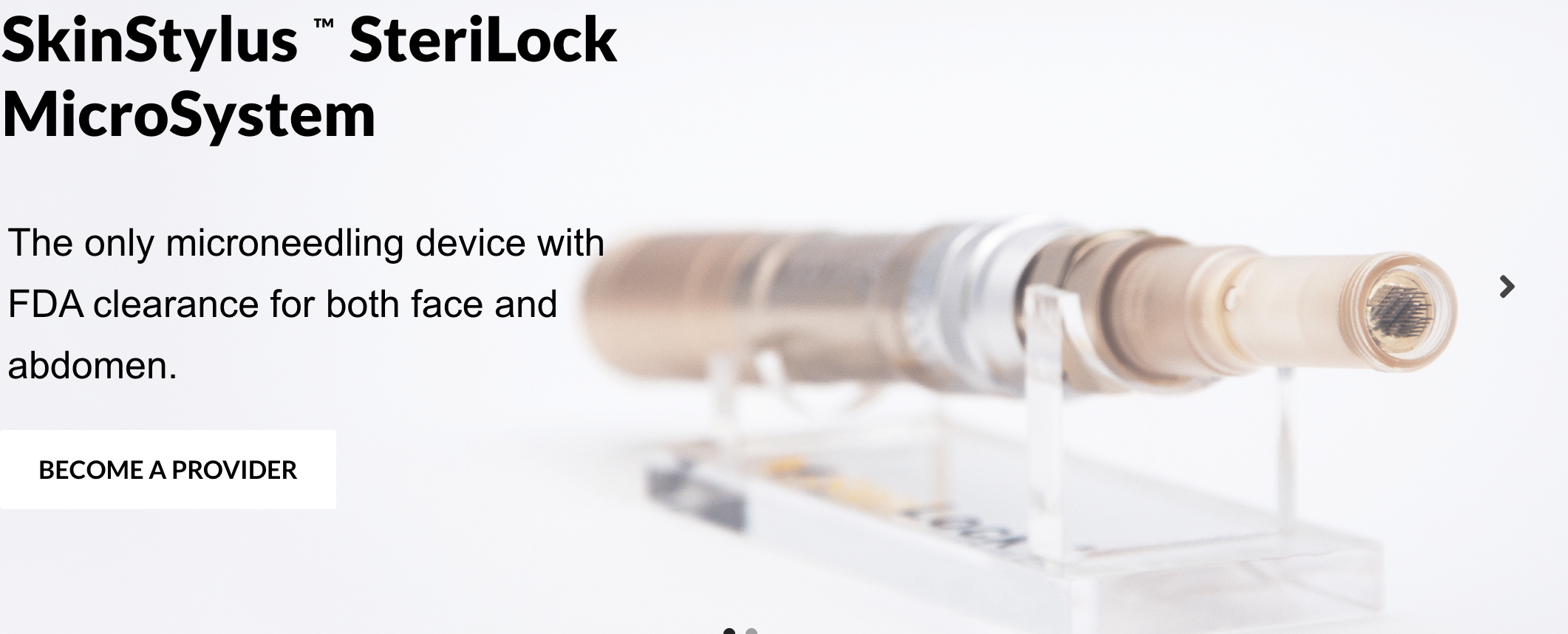
Equipment can vary just as much as the products used during a treatment. Some providers invest in advanced technology and FDA-cleared devices when applicable, such as certain microneedling systems and LED light therapy devices. FDA clearance means the device has undergone FDA review for its intended use before being legally marketed in the United States. While FDA clearance is only one factor to consider, it can provide additional confidence that the device has met regulatory requirements for its intended use. The U.S. Food and Drug Administration also recommends asking your provider about the devices they use, along with their training and experience, before undergoing an aesthetic procedure. Combined with an experienced provider, proper training, and individualized treatment planning, investing in FDA-cleared devices when appropriate demonstrates a commitment to providing safe, high-quality care and factors in the the overall professional skin treatments cost.
Time and Attention
Appointment length can also influence pricing. Some treatments focus primarily on performing the procedure itself, while others include a comprehensive consultation, skin analysis, treatment customization, education, post-treatment instructions, and recommendations for home care.
Taking the time to understand your skin and answer your questions may require a longer appointment, but it also helps ensure you’re receiving the most appropriate treatment rather than simply the quickest one.
Geographic Location and Business Costs
Like many professional services, skin treatment prices are also influenced by factors such as rent, insurance, utilities, staffing, equipment maintenance, continuing education, and the overall cost of operating a business. These expenses vary by region and can contribute to differences in pricing between providers.
However, higher operating costs alone do not necessarily mean a provider offers better care. Instead of comparing price by itself, consider what is included in the treatment and the experience, expertise, and level of personalization you receive.
The Same Treatment Isn’t Always the Same Treatment
One of the biggest reasons professional skin treatment prices vary is that treatments with the same name don’t always include the same services. Before comparing prices, it’s important to understand exactly what is included.
For example, one provider may advertise microneedling at a lower price, but the treatment may only include the face. Another provider may include the face and neck, topical numbing, a customized light chemical peel when appropriate, LED light therapy, and detailed aftercare instructions. While both treatments are called microneedling, they provide a very different overall experience and value.
The same is true for facials, chemical peels, dermaplaning, microdermabrasion, and many other professional skin treatments. One facial may include cleansing, exfoliation, and a mask, while another may include a comprehensive skin analysis, treatment stacking, extractions when appropriate, LED light therapy, and personalized home care recommendations.
In addition, one provider may use professional skincare brands and FDA-cleared devices when applicable, while another may use different products or equipment. These differences can influence the treatment experience, the level of customization, and the overall cost.
Rather than asking, “How much does this treatment cost?” ask, “What’s included?”
When comparing professional skin treatments, consider:
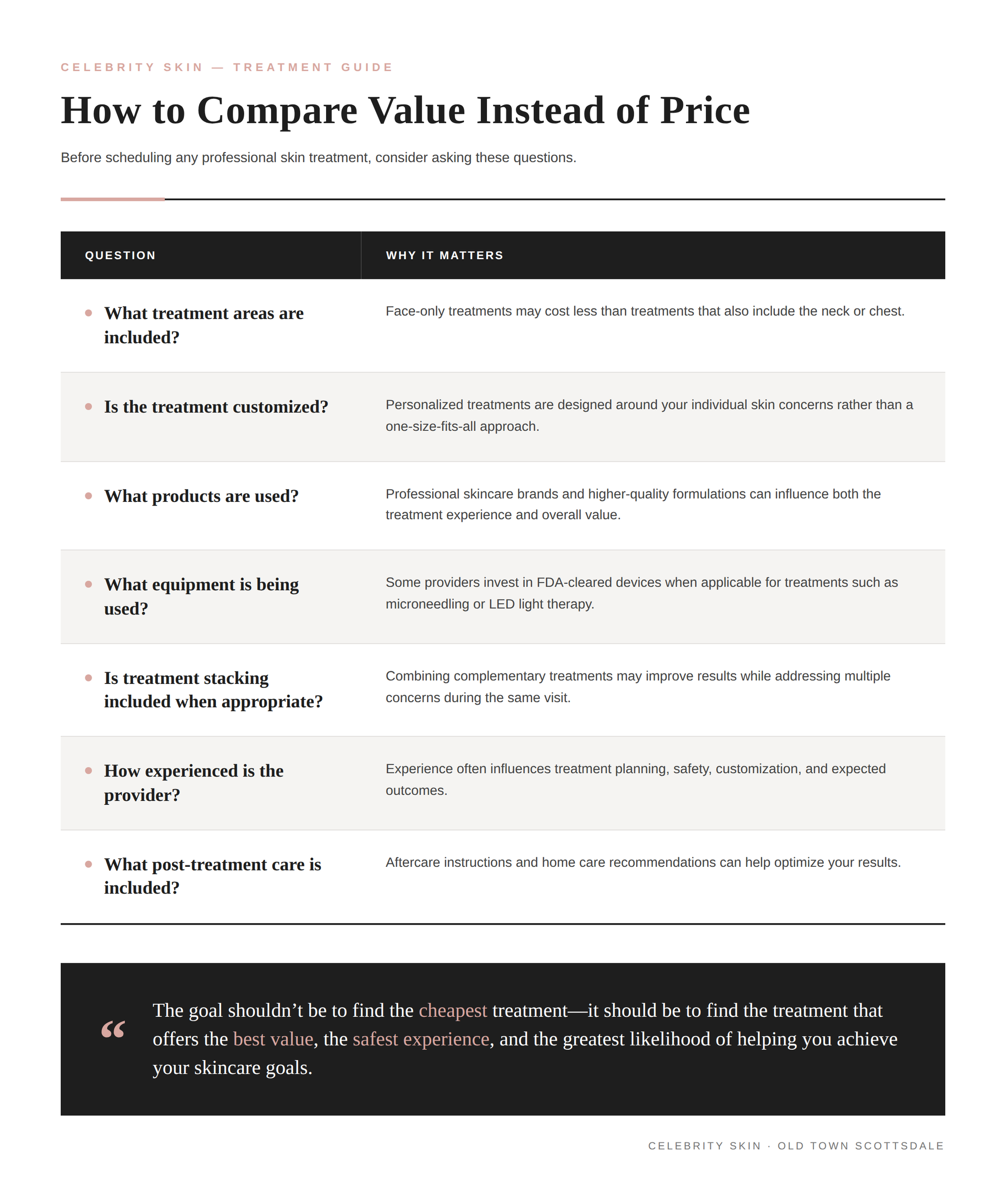
- What treatment areas are included? (Face only, face and neck, or face, neck, and chest?)
- Is the treatment customized for your skin or performed the same way for everyone?
- Does the provider combine complementary treatments when appropriate through treatment stacking?
- What products are used during the treatment?
- Are FDA-cleared devices used when applicable, such as for microneedling or LED light therapy?
- How much time is dedicated to consultation, education, and treatment planning?
- Are post-treatment products and aftercare instructions included?
Two treatments may have the same name, but they may differ significantly in what is included, the products and equipment used, the provider’s experience, and the level of customization. Understanding these differences can help you compare value instead of simply comparing price.
What Are You Really Paying For?
When you pay for a professional skin treatment, you’re paying for much more than the products applied during your appointment or the time spent performing the procedure. You’re investing in the provider’s knowledge, clinical judgment, experience, and ability to develop a treatment plan that’s appropriate for your skin.
A professional skin treatment begins long before the first product is applied. It starts with understanding your skin concerns, reviewing your health history, evaluating factors that may affect treatment, and selecting the procedures and products most likely to help you achieve your goals safely.
An experienced provider also knows when not to perform a treatment. Certain procedures may need to be postponed or modified because of medications, sun exposure, pregnancy, active infections, skin conditions, or other factors that could increase the risk of complications. Recognizing these situations is just as important as performing the treatment itself.
You’re also investing in ongoing education. The skincare industry continues to evolve with new research, ingredients, technologies, and treatment techniques. Providers who regularly pursue continuing education are often better equipped to provide evidence-based recommendations and customize treatments as new information becomes available.
Finally, you’re paying for a relationship with a professional who understands that healthy skin is a journey—not a single appointment. Many skin concerns, including acne, acne scarring, hyperpigmentation, melasma, and signs of aging, improve gradually through a customized treatment plan rather than one isolated procedure.
Is the Cheapest Treatment Really the Best Value?
Everyone appreciates finding a good value, but the lowest price doesn’t always provide the best overall experience or the best results.
Lower-priced treatments may simply reflect fewer services, shorter appointment times, different products, less customization, or smaller treatment areas. In other cases, they may represent an excellent value offered by a highly skilled provider. The important point is that price alone doesn’t tell the whole story.
Likewise, the highest-priced treatment isn’t automatically the best choice. Some providers invest heavily in luxury amenities, while others focus more on advanced education, treatment customization, and clinical outcomes. A beautiful office can certainly enhance your experience, but it doesn’t necessarily determine the quality of the treatment itself.
Instead of asking, “Who has the lowest price?”, consider asking:
- Is this treatment appropriate for my skin?
- Is the provider experienced in treating my specific concerns?
- What is included in the treatment?
- Will my treatment be customized?
- What results can I realistically expect?
These questions often provide much more valuable information than comparing prices alone.
How to Compare Value Instead of Price
Before scheduling any professional skin treatment, consider asking these questions.
What Should Professional Skin Treatments Cost Typically?
Although prices vary by geographic location, provider experience, and what’s included in the treatment, professional skin treatments generally fall within a range depending on the type of service.
For example, facials, chemical peels, microneedling, laser treatments, and other procedures each have their own pricing range based on the products used, treatment areas, appointment length, equipment, and level of customization.
Rather than focusing solely on the advertised price, compare everything included in the treatment. Two providers may advertise the same service but include very different treatment areas, products, technologies, consultation time, or complementary procedures.
Understanding these differences will help you make a more informed decision and avoid comparing treatments that are not truly equivalent.
The Best Treatment Is the One That’s Right for You
Choosing a professional skin treatment isn’t simply about finding the lowest price or even the most expensive provider. It’s about finding someone who understands your skin, listens to your concerns, develops a personalized treatment plan, and recommends treatments that are appropriate for your goals.
Every person’s skin is unique. The most effective treatment for one individual may not be the best choice for someone else. That’s why an experienced provider considers your skin type, skin tone, lifestyle, medical history, and long-term goals before recommending a treatment plan.
Professional skincare is an investment in your skin’s health. Understanding what professional skin treatments cost is only part of the decision. Comparing experience, customization, products, equipment and what’s included will help you find the best value.
The best treatment isn’t necessarily the one that costs the least or the most—it’s the one that’s right for you.
If you’re unsure which professional skin treatment is appropriate for your skin, scheduling a consultation can help you better understand your options and develop a customized treatment plan based on your unique concerns and goals.
Frequently Asked Questions
Why do professional skin treatment prices vary so much?
What Should Professional skin treatments cost varies based on the provider’s experience, treatment customization, products, equipment, treatment areas, appointment length, geographic location, and what is included in the service.
Does a higher price mean better results?
Not necessarily. Higher prices may reflect greater experience, more advanced equipment, additional services, or luxury amenities. The best treatment is one that is appropriate for your skin and performed safely by an experienced provider.
Why do treatments with the same name have different prices?
Treatments with the same name may include different treatment areas, products, technologies, consultation time, treatment stacking, or follow-up care. Always compare what is included rather than price alone.
What should I look for when choosing a skincare provider?
Consider the provider’s experience, education, treatment customization, before-and-after results, products, equipment, safety protocols, and whether they take the time to understand your skin and goals.
Are FDA-cleared devices important?
For treatments that use medical devices, many providers choose FDA-cleared equipment when applicable because it has undergone regulatory review for its intended use. However, the provider’s experience and proper technique remain equally important.
Why is treatment customization important?
Every person’s skin is different. Customizing treatments based on skin type, skin tone, medical history, medications, and goals helps improve safety and optimize results.
Is the cheapest treatment always the best value?
Not always. Lower-priced treatments may include fewer services, less customization, different products, or smaller treatment areas. Comparing everything included in the treatment provides a better measure of value than comparing price alone.