
By Jennifer Swink | Celebrity Skin
Quick Answer: The main difference between dry vs dehydrated skin is that dry skin lacks sufficient natural oils (sebum) and protective lipids, while dehydrated skin lacks water. Dry skin is generally a skin type, while dehydration is a skin condition that can affect anyone, including people with oily or acne-prone skin. You can also experience both conditions simultaneously, making it important to choose skincare products that address your skin’s actual needs.
Table of Contents
Dry vs Dehydrated Skin: Why the Difference Matters
Does your skin feel tight, rough, flaky, or look dull? You might assume you have dry skin, but dehydration could be contributing to the problem.
Although the symptoms overlap, dry and dehydrated skin have different underlying causes and may require different skincare approaches. Using the wrong moisturizer can leave your skin feeling greasy without resolving the tightness or discomfort.
At Celebrity Skin in Scottsdale, Arizona, I frequently see these concerns in my clinical practice. With over 25 years of experience in medical aesthetics, I’ve found that identifying whether skin needs hydration, lipid replenishment, or both is an important first step in developing an effective skincare routine.
What Is Dry Skin?
Dry skin is a skin type generally associated with lower natural oil production and sometimes reduced protective skin barrier lipids. These lipids help maintain the skin’s protective barrier and reduce moisture loss.
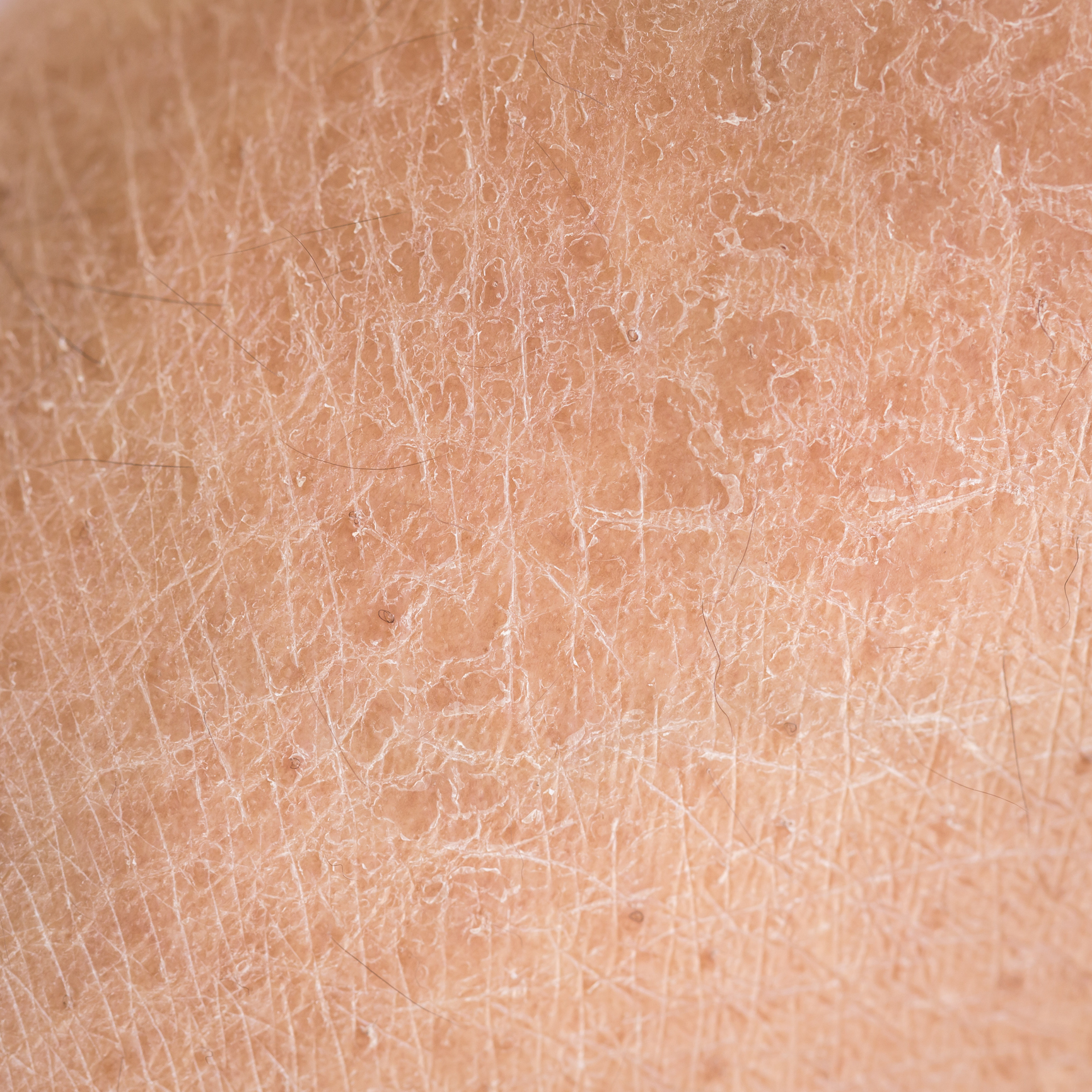
Common signs of dry skin include:
- Rough, flaky, or scaly texture
- Tightness, especially after cleansing
- Less visible pores
- Dullness or increased sensitivity
- Fine lines that appear more noticeable
Why Skin Often Becomes Drier After Menopause
Hormonal changes can significantly affect skin moisture. During perimenopause and after menopause, declining estrogen levels can contribute to reduced sebum production, changes in skin barrier function, and decreased skin hydration. As a result, women who previously had normal or even oily skin may notice increased dryness, tightness, and more visible fine lines.
This is one reason skincare needs often change with age. Products that worked well in your 30s or 40s may no longer provide sufficient hydration or lipid support after menopause.
What Does Dry Skin Need?
Dry skin benefits from lipid-replenishing ingredients that help soften the skin, support its protective barrier, and reduce water loss.
Look for ingredients such as:
- Ceramides: Help maintain the skin’s protective barrier.
- Cholesterol and fatty acids: Important components of the skin’s natural lipid structure.
- Squalane: An emollient that softens and smooths the skin.
A scientific review, Restoring Skin Hydration and Barrier Function, explains how emollients, humectants, and protective ingredients help maintain the skin’s moisture balance.
What Is Dehydrated Skin?
Dehydrated skin lacks sufficient water in its outermost layers. Unlike dry skin, dehydration can affect all skin types, including oily, combination, and acne-prone skin.
Common signs of dehydrated skin include:
- Tightness despite an oily appearance
- Dull or tired-looking complexion
- More noticeable superficial fine lines
- Rough or uneven texture
- Increased sensitivity or discomfort
Dehydration may result from low humidity, harsh cleansers, excessive exfoliation, or a compromised skin barrier.
What Does Dehydrated Skin Need?
Dehydrated skin benefits from humectants, ingredients that attract and bind water within the outer layers of the skin.
Look for:
- Hyaluronic acid: Helps bind water and temporarily plump the skin.
- Glycerin: Improves hydration and supports skin barrier function.
- Panthenol (Vitamin B5): Helps hydrate and soothe.
- Sodium PCA: A component of the skin’s natural moisturizing factor.
Research published in the British Journal of Dermatology, Glycerol and the Skin, describes glycerin’s role in hydration, elasticity, and skin barrier repair.
In dry climates, hydrating serums should be paired with an appropriate moisturizer to help retain water.
Why Oily Skin Can Feel Dry—and the Moisturizer Mistake
One of the most common skincare mistakes is assuming that skin that feels tight automatically needs a heavier moisturizer.
Oily skin can also be dehydrated. Your skin may produce plenty of oil while lacking sufficient water, creating the confusing combination of shiny skin that still feels tight, rough, or uncomfortable.
Applying a thick, oil-rich moisturizer isn’t necessarily the solution. Some formulations may feel greasy or be poorly tolerated by acne-prone skin without adequately addressing hydration.
The key is understanding what your skin is missing.
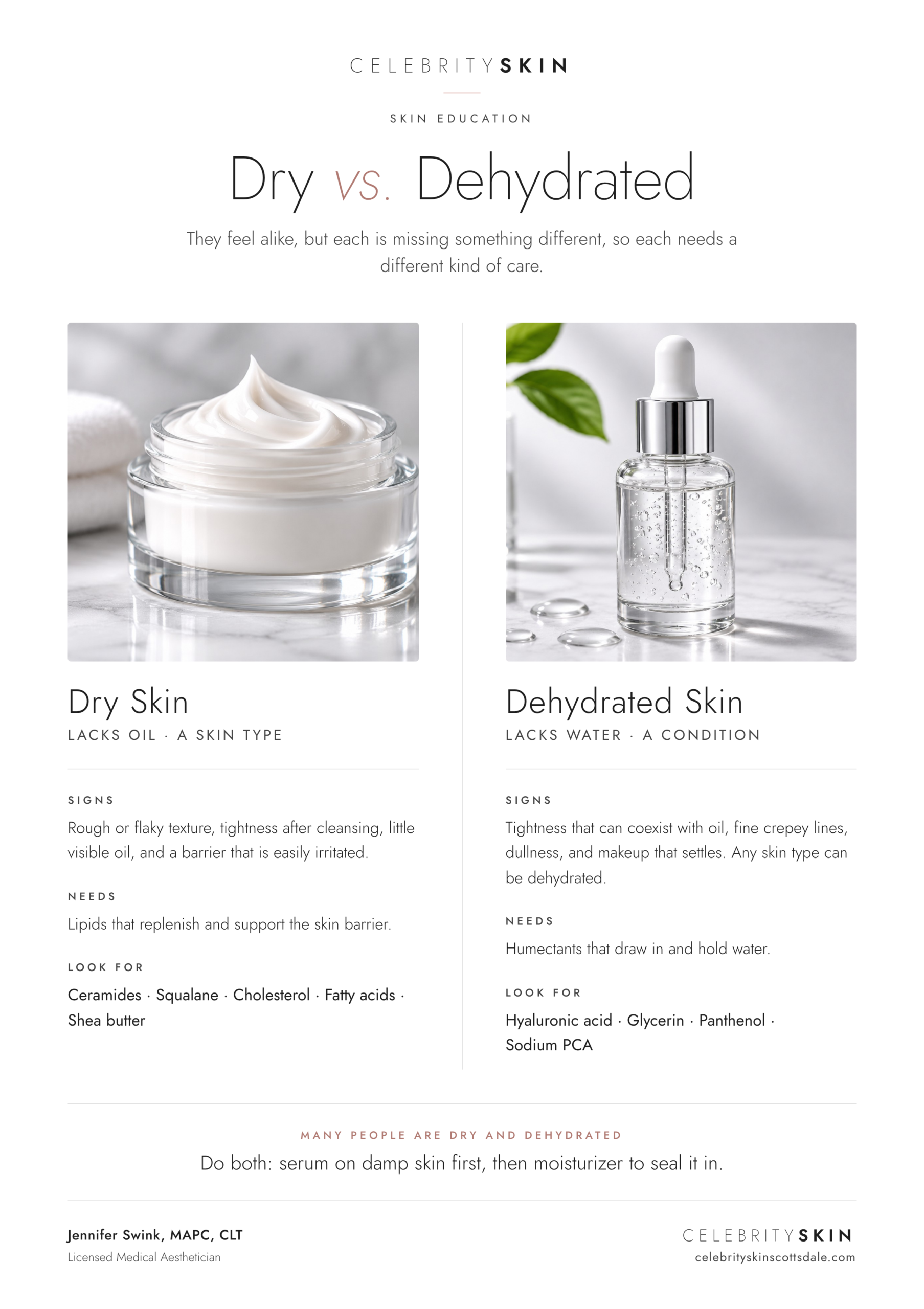
The takeaway: Dehydrated skin generally benefits from water-binding ingredients, dry skin needs lipid support, and skin experiencing both may benefit from a combination.
Remember, the best moisturizer isn’t necessarily the richest or most expensive. It’s the one formulated for your skin’s needs.
How Arizona’s Climate, Winter Heating, and Indoor Air Affect Your Skin
Where you live—and even the air inside your home—can significantly influence skin hydration.
In Scottsdale and throughout Arizona, low humidity, intense UV exposure, and prolonged air conditioning can contribute to dryness and dehydration.
However, this isn’t just an Arizona problem. Cold winter weather and indoor heating can create similarly dry conditions in homes throughout the country.
When the skin’s protective barrier is compromised, it may lose water more easily through a process called transepidermal water loss (TEWL).
A scientific review, The Effect of Environmental Humidity and Temperature on Skin Barrier Function, explains how cold temperatures and low humidity can negatively affect the skin barrier.
8 Simple Ways to Help Keep Your Skin Hydrated Naturally
- Use a bedroom humidifier. Maintaining indoor humidity around 40–50% may help reduce dryness, especially during winter or in desert climates. Clean the humidifier regularly to prevent microbial growth.
- Avoid long, hot showers. Choose lukewarm water to help preserve protective skin oils.
- Moisturize while skin is slightly damp. This helps retain water after bathing.
- Choose gentle cleansers. Avoid harsh soaps and excessive cleansing that can disrupt the skin barrier.
- Stay adequately hydrated. Drinking sufficient water supports overall health, although drinking more water alone won’t necessarily correct dehydrated skin.
- Include healthy fats in your diet. Olive oil, avocados, nuts, seeds, and fatty fish provide essential fatty acids that support overall skin health.
- Avoid overexfoliation. Excessive use of acids, scrubs, and exfoliating treatments can compromise the skin barrier and contribute to irritation.
- Practice consistent sun protection. UV exposure can damage the skin and accelerate visible aging regardless of the season.
These simple changes can complement your skincare routine and help protect your skin’s natural moisture balance.
Can Professional Treatments Help Dry or Dehydrated Skin?
Yes. Both dry and dehydrated skin can interfere with desquamation, the skin’s natural process of shedding dead skin cells. When skin lacks adequate moisture, this process may become less efficient, allowing dead skin cells to accumulate on the surface.
This buildup can leave skin looking dull, rough, or flaky and may interfere with the even application and absorption of certain skincare products.
Scientific research published in the International Journal of Cosmetic Science, Dry Skin, Moisturization and Corneodesmolysis, explains how insufficient moisture can disrupt the enzymes responsible for normal skin cell shedding.
Professional exfoliation can help remove accumulated dead skin cells, improve skin texture, and prepare the skin for hydrating and lipid-replenishing products.
Depending on your skin’s condition, options range from gentle enzyme exfoliation, dermaplaning, and microdermabrasion to superficial and medium-depth chemical peels. Different exfoliation methods and strengths address different skin concerns, and more aggressive treatments aren’t necessarily better for dry or dehydrated skin.
For a deeper understanding of exfoliation, read our articles on Dermaplaning vs. Microdermabrasion and Light vs. Medium-Depth Chemical Peels.
The goal is to improve skin texture and support healthy cell turnover while maintaining the skin’s protective barrier. When the barrier is already compromised, restoring hydration and barrier function should take priority over exfoliation.
Frequently Asked Questions About Dry vs Dehydrated Skin
Can oily skin really be dehydrated?
Yes. Oil production and water content are different. Oily skin can lack adequate hydration, particularly when harsh cleansers or acne products disrupt the skin barrier.
Does hyaluronic acid work for dry skin?
Yes. Hyaluronic acid helps bind water, but naturally dry skin also benefits from moisturizers containing lipids and ingredients that reduce moisture loss.
Can skin be dry and dehydrated at the same time?
Absolutely. Many people benefit from combining a humectant-rich serum with a lipid-replenishing moisturizer.
Does drinking more water fix dehydrated skin?
Adequate fluid intake is important, but topical hydration and skin barrier support are often more directly helpful when dehydration results from environmental conditions or skincare habits.
Can a humidifier improve dry skin?
A humidifier may help reduce dryness associated with low indoor humidity, especially during winter or in desert climates. It works best alongside an appropriate skincare routine.
How do I know which moisturizer is right for my skin?
The best moisturizer depends on your natural skin type, hydration level, barrier condition, and environment. A professional skin consultation can help determine whether your skin needs humectants, lipids, or both.
Stop Guessing What Your Skin Needs
Healthy skin requires the right balance of water, protective lipids, and an effective skin barrier.
If your skin continues to feel tight, dry, oily, or uncomfortable despite using moisturizers, you may be treating the wrong condition—or using products that aren’t appropriate for your skin.
At Celebrity Skin in Scottsdale, Arizona, I bring more than 25 years of medical aesthetics experience to helping clients understand their skin and select appropriate professional treatments and home-care products.
Whether you live in Arizona or elsewhere, an in-person or virtual skin consultation can help identify your concerns, review your current products, and develop a personalized skincare plan.
Celebrity Skin | Scottsdale, Arizona