
Wrinkles and Aging Skin
Understanding Collagen Loss, Fine Lines & Visible Skin Aging
Wrinkles and visible skin aging are influenced by collagen and elastin loss, sun and environmental damage over time, inflammation, hormonal changes, diet, and lifestyle factors.
At Celebrity Skin Scottsdale, we take a functional + corrective approach to aging skin—addressing both the internal and external factors that influence how your skin ages, as well as visible concerns such as fine lines, wrinkles, uneven pigmentation, changes in texture, loss of firmness, and overall skin quality.
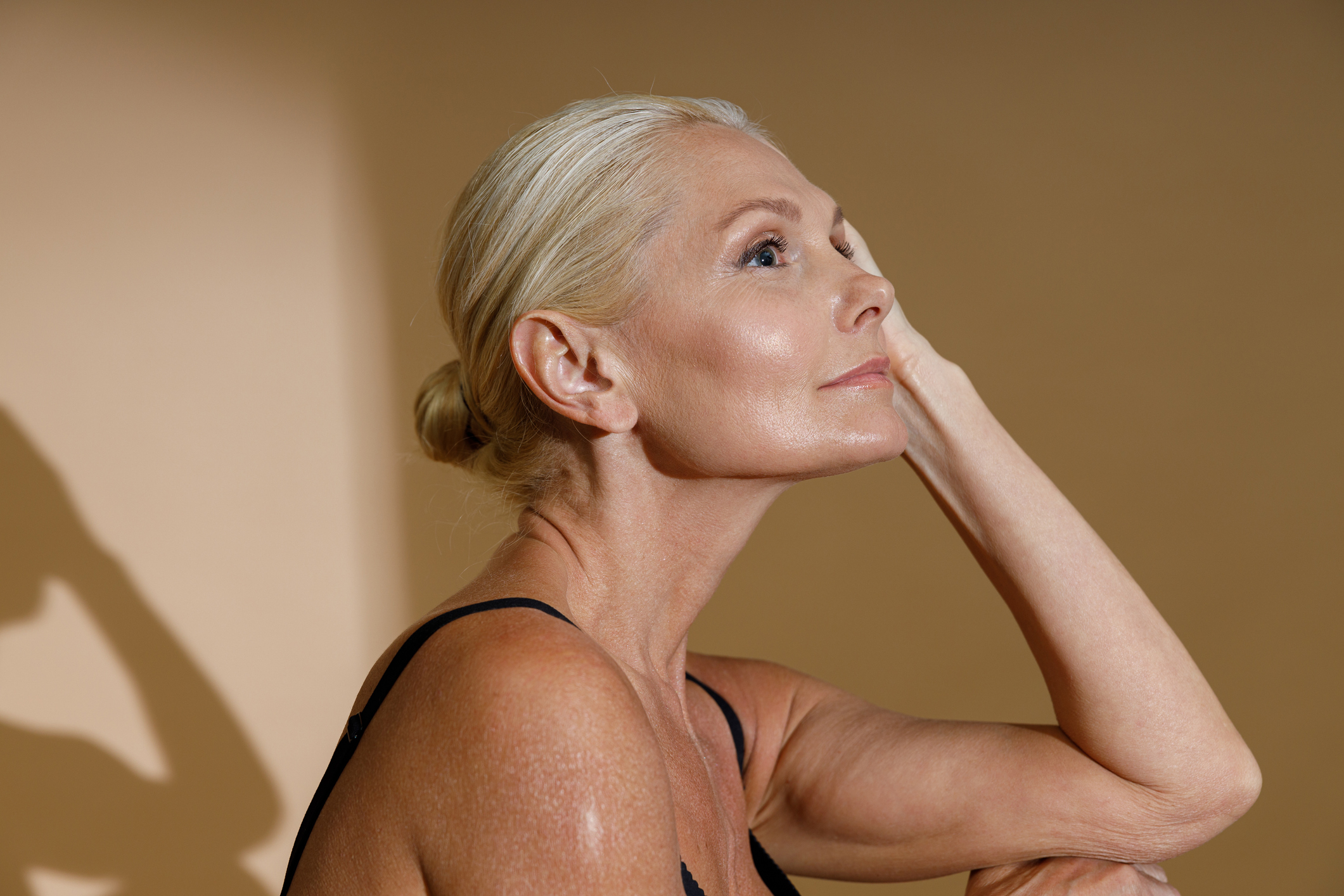
“Genetics play a role in how your skin ages, but diet, lifestyle, inflammation, and environmental factors can significantly influence how quickly visible aging develops.”
-Jennifer SwinkTable of Contents
What Causes Wrinkles & Aging Skin
Wrinkles develop over time due to structural and biological changes in the skin. The primary drivers include:
- Collagen and elastin breakdown
- Chronic inflammation
- Glycation (AGEs)
Collagen naturally changes and declines over time, contributing to fine lines, wrinkles, and loss of firmness. Learn more about how your skin builds collagen and why collagen production changes as we age.
Advanced Glycation End Products (AGEs) form when sugar binds to collagen, weakening its structure and contributing to stiffness, fine lines, and loss of elasticity.
Visible Signs of Aging
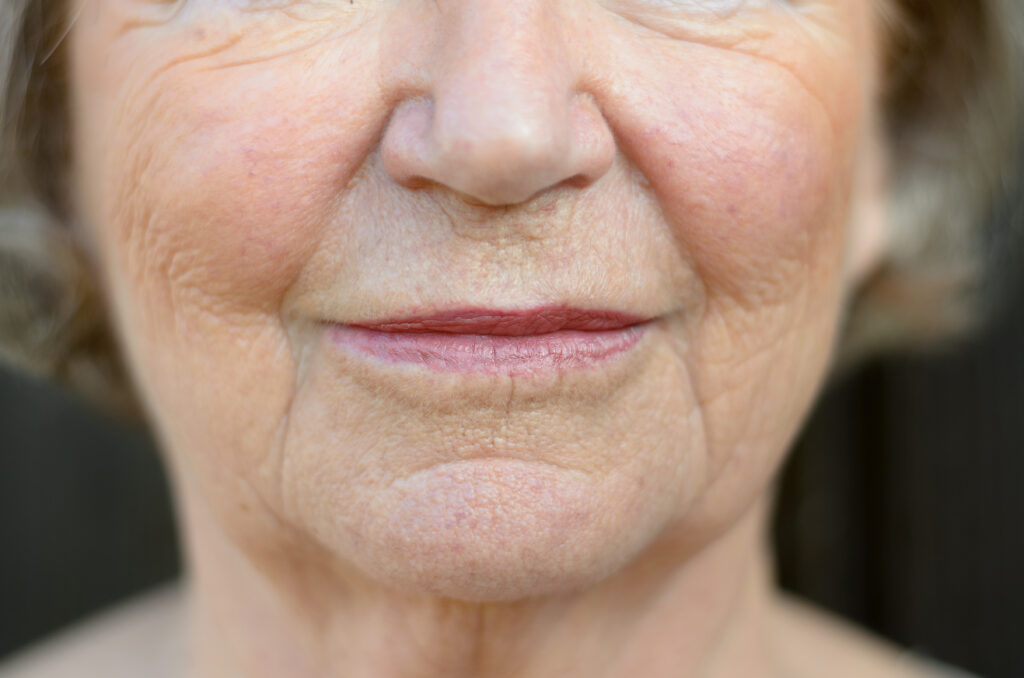
- Fine lines and wrinkles (eyes, forehead, mouth)
- Loss of firmness and sagging
- Uneven skin tone and hyperpigmentation
- Rough texture and enlarged pores
- Dull, dehydrated skin
- Thinning or crepey skin
Related Research
Internal Factors That Influence Skin Aging
- Chronic inflammation
- Glycation (AGEs)
- Hormonal changes
- Nutritional deficiencies
- Slower cell turnover
- Collagen loss with age
External Factors That Influence Skin Aging
- UV exposure over time
- Heat (especially in Arizona climates)
- Pollution + environmental toxins
- Skincare habits
Diet, Lifestyle & Skin Aging
This is one of the most overlooked—yet most powerful—factors in how your skin ages. Your skin is a reflection of what is happening internally.
Even the most advanced treatments cannot fully correct ongoing internal imbalances like inflammation, hormone disruption, toxin exposure, poor diet and chronic stress.
If these are not addressed, the skin is constantly trying to repair while being broken down at the same time.
How Diet Affects Skin Aging
What you eat directly impacts inflammation, gut health, hormones, and collagen integrity. A diet high in sugar and processed foods and low in fiber and nutrient-dense whole foods creates internal imbalances that accelerate visible aging.
- High sugar intake → increases AGEs (Advanced Glycation End Products), weakening collagen
- Processed foods → increase inflammation and oxidative stress
- Low fiber intake → disrupts gut health and detox pathways
- Nutrient deficiencies → slow repair, healing, and collagen production
What Are AGEs (Advanced Glycation End Products)?
Advanced Glycation End Products (AGEs) form when sugars bind to proteins such as collagen through a process called glycation. Over time, this can make collagen fibers stiffer and less flexible and contribute to loss of elasticity, fine lines, and other visible signs of aging.
AGE formation can be influenced by factors including:
- High blood sugar and excess sugar intake
- Diets high in processed foods
- Certain high-heat cooking methods
- Oxidative stress and inflammation
Reducing excessive sugar and highly processed foods while emphasizing nutrient-dense whole foods can help support overall skin and metabolic health.
Gut Health & Skin Function
Gut health can influence inflammation, nutrient absorption, and overall skin function. A healthy digestive system helps the body absorb nutrients needed for normal collagen production, skin repair, and barrier function.
Because gut health, diet, inflammation, and skin health are interconnected, supporting overall health can be an important part of a comprehensive approach to healthy skin as we age.
Inflammation & Skin Aging
Chronic inflammation can contribute to premature skin aging by affecting collagen, oxidative stress, and the skin’s natural repair processes.
Over time, chronic inflammation may contribute to:
- Collagen and elastin breakdown
- Increased oxidative stress
- Glycation and the formation of AGEs
- Slower skin repair and regeneration
- Changes in skin texture, firmness, and overall skin quality
Inflammation can also be influenced by factors such as diet, stress, sleep, blood sugar regulation, and overall health.
Insulin, Blood Sugar & Inflammation
Blood sugar regulation can also influence skin aging. Chronically elevated blood sugar can increase glycation and the formation of AGEs, which can damage collagen and contribute to loss of elasticity and visible signs of aging.
A diet that supports healthy blood sugar regulation may therefore help support collagen integrity and overall skin health as we age.
Hormonal Changes & Skin Aging
Hormonal changes can affect how the skin looks, feels, and ages. Changes in estrogen and other hormones over time can influence collagen production, skin thickness, hydration, elasticity, pigmentation, and the skin’s ability to repair itself.
This is one reason many women notice more significant changes in their skin during perimenopause and menopause, including increased dryness, fine lines, loss of firmness, and changes in overall skin quality.
These changes can become especially noticeable in midlife. Learn more about why your skin can suddenly look older after 50 and what may be contributing to those changes.
Environmental Toxins & Skin Aging
Exposure to environmental pollutants and other environmental toxins may contribute to oxidative stress and inflammation, both of which can affect skin health and visible aging over time.
Reducing unnecessary exposure while supporting overall health, nutrition, and the skin barrier can be part of a broader approach to maintaining healthy skin as we age.
How Stress Impacts Skin Aging
Chronic stress can influence skin aging by increasing cortisol, inflammation, and oxidative stress while also interfering with sleep and normal skin repair.
Over time, chronic stress may contribute to:
- Collagen breakdown and slower skin repair
- Increased inflammation and oxidative stress
- Dryness, dehydration, and a weakened skin barrier
- Dull or tired-looking skin
- Changes in skin texture and overall skin quality
Managing stress and getting adequate sleep are important parts of supporting healthy skin as we age.
Exercise, Movement & Skin Health
Regular exercise and movement support overall health and can also benefit the skin by improving circulation, supporting healthy blood sugar regulation, reducing chronic inflammation, and improving sleep and stress management.
These factors can help support normal skin repair, collagen health, and overall skin quality as we age.
Learn more about the lifestyle, skincare, and professional treatment options that can support collagen in How to Rebuild Lost Collagen.
How We Treat Aging Skin
There is no single best treatment for aging skin because everyone ages differently. Fine lines, collagen loss, sun damage, hyperpigmentation, rough texture, enlarged pores, dryness, and loss of firmness may require different approaches.
At Celebrity Skin Scottsdale, treatments are selected and customized based on your skin, concerns, goals, and skin tone.
Microneedling
Microneedling stimulates the skin’s natural collagen and elastin production to improve fine lines, wrinkles, enlarged pores, uneven texture, firmness, and overall skin quality.
PDRN Microneedling
PDRN microneedling combines collagen-stimulating microneedling with PDRN to support skin repair, hydration, elasticity, and overall skin quality. It can be especially beneficial for dry, mature, or aging skin.
Exosome Microneedling
Exosome microneedling combines microneedling with regenerative exosomes to support skin recovery and rejuvenation while improving the appearance of fine lines, texture, firmness, and overall skin quality.
Clear + Brilliant
Clear + Brilliant is a gentle fractional laser treatment that can improve early signs of aging, sun damage, uneven pigmentation, enlarged pores, and skin texture with minimal downtime.
Chemical Peels
Customized chemical peels can improve dullness, uneven pigmentation, fine lines, rough texture, and overall skin renewal. Peel type and strength are selected based on your skin tone, concerns, and desired level of correction.
Medium-Depth Chemical Peels
Medium-depth chemical peels provide more intensive exfoliation and resurfacing for concerns such as sun damage, hyperpigmentation, uneven texture, fine lines, and more advanced signs of visible aging.
LED Light Therapy
FDA-cleared LED light therapy can be incorporated into an aging-skin treatment plan to support skin recovery, reduce inflammation, and promote overall skin health.
Not sure which treatment is right for your skin? A professional skin consultation can help determine which treatments are best suited to your concerns, skin tone, goals, and desired downtime.
Why Combining Treatments Works
Aging skin often has more than one concern at the same time—such as collagen loss, fine lines, pigmentation, sun damage, enlarged pores, or uneven texture. Because different treatments work in different ways, combining or alternating treatments can sometimes provide a more comprehensive approach than relying on a single treatment alone.
For example, microneedling may be used to stimulate collagen and improve texture, while chemical peels or Clear + Brilliant may be incorporated to address pigmentation, sun damage, and skin renewal.
Your treatment plan should be customized based on your skin, concerns, goals, skin tone, and how much downtime you are comfortable with.
Why a Corrective Approach Works
Healthy skin aging is influenced by more than what we apply to the surface of the skin. Diet, inflammation, hormones, stress, sleep, blood sugar regulation, sun exposure, environmental factors, and skincare habits can all influence how the skin looks, functions, and ages over time.
At Celebrity Skin Scottsdale, our functional + corrective approach considers these internal and lifestyle factors alongside professional treatments and a customized home skincare routine.
The goal isn’t to stop aging—it’s to support healthier skin while improving the visible concerns that matter most to you.
Aging Skin FAQs
What are the best treatments for aging skin, fine lines, and wrinkles?
The best treatment depends on what you want to improve. Microneedling may be recommended for collagen loss, fine lines, enlarged pores, and uneven texture; Clear + Brilliant for early signs of aging, sun damage, pigmentation, and texture; and chemical peels for dullness, pigmentation, fine lines, and skin renewal.
PDRN or exosome microneedling may also be incorporated when additional support for hydration, recovery, and overall skin quality is desired. Many clients benefit from combining or alternating treatments as part of a customized aging-skin treatment plan.
Can reducing inflammation improve my skin?
Yes. Chronic inflammation can affect collagen, skin repair, pigmentation, barrier function, and overall skin quality. Reducing factors that contribute to chronic inflammation—such as poor diet, chronic stress, inadequate sleep, and blood sugar dysregulation—may help support healthier skin and complement professional skin treatments.
How does diet affect wrinkles and aging skin?
Diet can influence skin aging through inflammation, blood sugar regulation, nutrient intake, and glycation—the process that contributes to the formation of Advanced Glycation End Products (AGEs). Over time, AGEs can make collagen less flexible and contribute to visible signs of aging.
A nutrient-dense diet that limits excessive sugar and highly processed foods can help support collagen, normal skin repair, and overall skin health.
Can lifestyle changes really make a difference in your skin?
Yes. Diet, stress, sleep, exercise, sun exposure, and daily skincare habits can all influence how your skin looks and ages over time. Healthy lifestyle habits can support collagen, skin repair, inflammation control, and overall skin health while also complementing the results of professional treatments.
At what age should I start anti-aging treatments?
There is no specific age when you need to start anti-aging treatments. The right time depends more on your skin, lifestyle, sun exposure, genetics, and the concerns you are beginning to notice.
Preventive skincare, daily sun protection, and healthy lifestyle habits can begin early, while professional treatments can be added when concerns such as fine lines, pigmentation, sun damage, uneven texture, enlarged pores, or collagen loss begin to appear.
The goal is to choose treatments based on what your skin actually needs rather than your age alone.
Do all treatments work for all skin tones?
No. Not every skin treatment is appropriate for every skin tone. Certain lasers, aggressive resurfacing treatments, and even some chemical peels can carry a greater risk of post-inflammatory hyperpigmentation in darker skin tones.
Treatment selection should take skin tone, the condition being treated, treatment intensity, and the risk of pigmentation into consideration. At Celebrity Skin Scottsdale, treatments are selected and customized with these factors in mind.
What causes wrinkles besides aging?
Wrinkles aren’t caused by age alone. Collagen and elastin loss, cumulative sun exposure, inflammation, glycation, hormonal changes, stress, diet, environmental factors, and repetitive facial movement can all contribute to the development of fine lines and wrinkles.
These factors affect the skin in different ways, which is why preventing and treating wrinkles often requires more than one approach.
How long do results last?
How long results last depends on the treatment, your skin, the concerns being treated, and how your skin continues to age over time. Treatments that stimulate collagen or improve pigmentation and texture can produce longer-term improvements, but they do not stop the natural aging process.
Consistent home skincare, sun protection, healthy lifestyle habits, and periodic maintenance treatments can help maintain and extend your results.
✨ Start Your Personalized Skin Plan ✨
Aging skin is not one-size-fits-all. The most effective results come from understanding what’s happening both internally and externally.
Book Your New Client Skin Care Consultation (Fastest & Easiest Way to Get Started)
custom services for aging, fine lines, and wrinkles
- New Client Consultation
- New Client Consultation + Treatment
- Acne Deep Pore Cleansing Chemical Peel Facial + Light Therapy
- Body Chemical Peel
- Celebrity Skin Signature Chemical Peel Treatment + Light Therapy
- Dermaplaning Facial + Light Therapy + Light Therapy
- Exosome Microneedling Facial (Stem Cells)
- Hand Chemical Peel
- Celebrity Skin Medium Depth Chemical Peel
- Microdermabrasion Facial + Light Therapy
- Men’s Facial + Light Therapy
- Microneedling Treatment
- Microneedling Treatment Face, Neck, Chest & Hands
- Microdermabrasion Facial + Light Therapy
- Plasma Pen Free Consultation
- VI Peel Face or Chest
- The “Works” Chemical Peel Treatment
* All aging, wrinkles, and fine lines treatment protocols can and will be customized for your specific needs
Everyone’s skin is different. The best thing is to do is book a New Client Consultation + Treatment to discuss and personalize your treatment with products to meet your individual needs.
Explore topics related to aging skin, lines, and wrinkles
Sorry, no posts were found.