
By Jennifer Swink | Celebrity Skin
LED Light Therapy uses specific wavelengths of light to help improve acne, signs of skin aging, inflammation, wound healing, and, in some cases, post-inflammatory hyperpigmentation. However, not all LED light is the same. Blue LED light, red LED light, near-infrared light, and far-infrared light each penetrate the skin differently and produce different biological effects, making it important to choose the right type of light for your specific skin concerns and goals.
If you’ve been researching LED Light Therapy, you’ve probably seen terms like red light therapy, infrared therapy, near-infrared light, LED masks, and infrared saunas used almost interchangeably. It’s no wonder people are confused. While these technologies are related, they are not the same, and understanding the differences can help you make better decisions about professional treatments and at-home devices.
Table of Contents
What Is LED Light Therapy?
LED stands for Light Emitting Diode. Unlike lasers or intense pulsed light (IPL), LED Light Therapy does not damage the skin by creating controlled injury. Instead, it works through a process called photobiomodulation, where specific wavelengths of light stimulate your cells to function more efficiently.
Inside every cell are tiny structures called mitochondria that produce ATP (adenosine triphosphate), the energy your cells need to repair damage, reduce inflammation, build collagen, and maintain healthy tissue. When certain wavelengths of light are absorbed by the mitochondria, ATP production increases, allowing the skin to heal and function more effectively.
A comprehensive 2024 review published in the International Journal of Molecular Sciences found that photobiomodulation (LED Light Therapy) can support wound healing, reduce inflammation, improve skin rejuvenation, and enhance cellular repair through multiple biological pathways.
Because LED Light Therapy is gentle, non-invasive, and requires little to no downtime, it is frequently incorporated into professional treatments to enhance healing and improve results.
Think of LED Light Therapy as a toolbox rather than a single treatment. Just as different medications are used to treat different conditions, different wavelengths of light are designed to target different biological processes within the skin. Choosing the right wavelength is one of the biggest factors in achieving the best possible results.
If you’d like to learn more about how professional LED treatments are incorporated into customized skincare plans, visit our LED Light Therapy page.
Understanding the Different Types of LED Light
One of the biggest misconceptions is that all light therapy works the same way.
In reality, different wavelengths penetrate to different depths within the skin and underlying tissues. That means each wavelength is better suited for specific concerns.
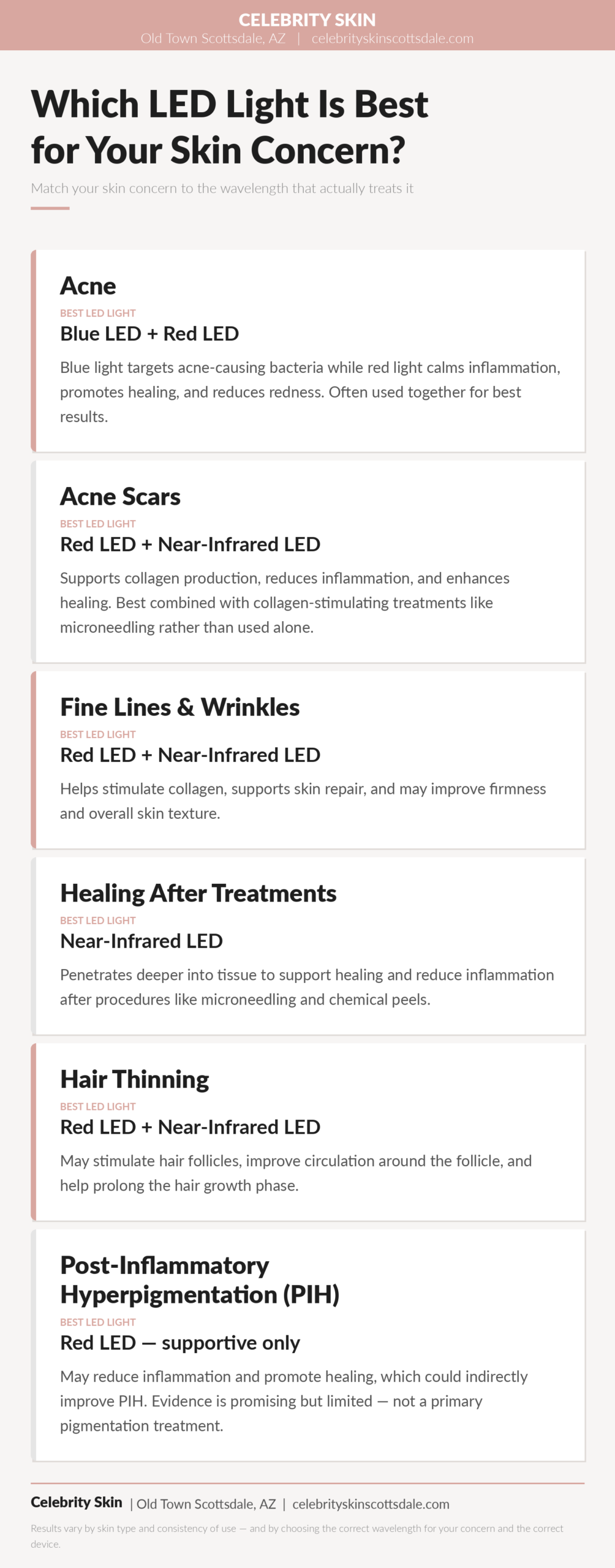
Blue light is primarily used for acne.
Red light is best known for collagen production and reducing inflammation.
Near-infrared light penetrates deeper to support tissue repair and healing.
Far-infrared light is primarily used for heat therapy and wellness applications rather than facial skin rejuvenation.
This is why choosing the correct wavelength is far more important than simply buying an LED mask because it claims to have “red light.”
Blue LED Light Therapy for Acne
Blue LED light generally falls between 405 and 470 nanometers (nm) and is primarily used to treat inflammatory acne.
Acne-causing bacteria naturally produce compounds called porphyrins. When these compounds absorb blue light, they create a reaction that helps destroy the bacteria while leaving the surrounding skin relatively unharmed.
Clinical research has shown that blue LED Light Therapy can significantly improve mild to moderate inflammatory acne by reducing acne-causing bacteria and inflammation, particularly when combined with an appropriate skincare routine and professional treatment plan.
Blue LED Light Therapy may help:
- Reduce acne-causing bacteria
- Improve inflammatory breakouts
- Reduce redness associated with acne
- Support clearer skin over time
Blue light works best when combined with a comprehensive acne treatment plan rather than as a standalone treatment.
At Celebrity Skin Scottsdale, we often combine LED Light Therapy with professional acne treatments, customized skincare, and lifestyle recommendations because acne is influenced by many factors beyond bacteria alone.
Learn more about our Acne Treatments, and our blog on Best Acne Treatments for Teenagers to better understand the causes of persistent acne.
Red LED Light Therapy for Skin Aging
Red LED light generally ranges from 620 to 700 nanometers and penetrates deeper into the skin than blue light.
Its primary target is the fibroblast, the cell responsible for producing collagen and elastin.
As collagen naturally declines with age—especially after menopause—skin begins to lose firmness, elasticity, and thickness. Red LED Light Therapy helps support collagen production while also calming inflammation that contributes to premature skin aging.
Clinical studies have shown that red LED Light Therapy may improve skin texture, stimulate collagen production, reduce inflammation, and support overall skin rejuvenation with minimal downtime.
Potential benefits include:
- Improved skin firmness
- Reduced appearance of fine lines
- Improved skin texture
- Reduced inflammation
- Faster healing after aesthetic procedures
Although red LED Light Therapy can stimulate collagen production, it is most effective when combined with collagen-stimulating procedures.
For example, many patients choose to combine LED Light Therapy with Microneedling or Chemical Peels to enhance healing and optimize results.
You may also enjoy reading our blog, Why Your Skin Suddenly Looks Older After 50, which explores the many factors that contribute to collagen loss and accelerated skin aging.
Near-Infrared Light: Healing Below the Surface
Near-infrared (NIR) light ranges from approximately 700 to 900 nanometers. Although it is invisible to the human eye, it penetrates deeper than red light and reaches connective tissue, muscles, and deeper structures beneath the skin.
Rather than primarily stimulating collagen, near-infrared light is commonly used to support:
- Tissue repair
- Wound healing
- Recovery after procedures
- Reduced inflammation
- Improved cellular repair
This is one reason many professional medical-grade LED systems combine red light with near-infrared light. While red light supports collagen production closer to the surface, near-infrared helps support healing in deeper tissues.
Research suggests that combining red and near-infrared light may enhance tissue repair, reduce inflammation, and support faster healing following aesthetic procedures such as microneedling.
Far-Infrared Light: Not the Same as Facial LED Therapy
Far-infrared (FIR) light is probably the most misunderstood type of light discussed in the wellness industry. While it is often grouped together with LED Light Therapy, far-infrared light is not the same as the blue, red, or near-infrared light used in professional facial treatments.
Far-infrared wavelengths are much longer—typically between 3 micrometers (3,000 nanometers) and 1 millimeter. Instead of stimulating cellular energy production through photobiomodulation, far-infrared primarily works by generating gentle heat within the body’s tissues.
This is the type of infrared light commonly used in:
- Infrared saunas
- Therapeutic heating pads
- Whole-body wellness devices
- Heat therapy systems
Far-infrared therapy has been studied for improving circulation, reducing muscle soreness, and promoting relaxation. However, it should not be confused with professional LED Light Therapy designed to improve acne, stimulate collagen production, or accelerate skin healing.
Understanding this distinction can help prevent one of the most common misconceptions—that all “infrared therapy” produces the same effects.
Can LED Light Therapy Help Hyperpigmentation?
This is one of the questions I hear most often.
The short answer is possibly—but with realistic expectations.
Unlike acne or skin rejuvenation, the research supporting LED Light Therapy for hyperpigmentation is still emerging. Current evidence suggests that red LED light and near-infrared light may indirectly improve some cases of post-inflammatory hyperpigmentation (PIH) by reducing inflammation and supporting the skin’s natural healing process.
Because inflammation is one of the driving forces behind PIH, calming inflammation may help reduce the amount of pigment produced after acne or skin injury.
However, LED Light Therapy is not considered a primary treatment for melasma or most pigment disorders. It does not directly target excess melanin the way pigment-specific lasers or certain topical ingredients do.
If your primary concern is hyperpigmentation, I recommend thinking of LED Light Therapy as a supportive treatment rather than a standalone solution. The best results usually come from combining professional treatments with medical-grade skincare, daily sun protection, and ingredients that target pigment production.
- Learn more about Hyperpigmentation
- Learn more about Post-Inflammatory Hyperpigmentation: Causes and Treatment
A recent review concluded that while early research suggests photobiomodulation may help reduce inflammation and support healing in post-inflammatory hyperpigmentation, additional high-quality clinical studies are still needed before LED Light Therapy can be recommended as a primary treatment for pigmentation disorders.
Can LED Light Therapy Improve Acne Scars?
Many people assume that once acne clears, LED Light Therapy can erase the scars that remain.
The answer is yes—but not by itself.
Red LED Light Therapy and near-infrared light may help support collagen production, reduce inflammation, and improve the skin’s healing response. These effects may contribute to healthier skin remodeling over time.
However, established acne scars usually require treatments that intentionally stimulate significant collagen remodeling, such as microneedling.
Research has shown that photobiomodulation may support collagen remodeling and tissue repair, making it an excellent complementary treatment following procedures such as microneedling, although it is unlikely to significantly improve established acne scars when used alone.
This is one reason LED Light Therapy is often performed after microneedling. It helps calm inflammation, supports healing, and may enhance recovery while your skin begins producing new collagen.
LED Light Therapy for Hair Growth
LED Light Therapy isn’t just used for skincare.
Red LED light and near-infrared light have also been studied for improving androgenetic alopecia (pattern hair loss).
Researchers believe these wavelengths may improve cellular energy production within the hair follicle, increase circulation around the follicle, and help prolong the active growth phase of the hair cycle.
Multiple clinical studies and systematic reviews have shown that red and near-infrared photobiomodulation can improve hair density and thickness in men and women with androgenetic alopecia when used consistently over time.
Although LED Light Therapy is not a cure for hair loss, it may be a valuable addition to a comprehensive hair restoration program.
Why Not All LED Masks Are the Same
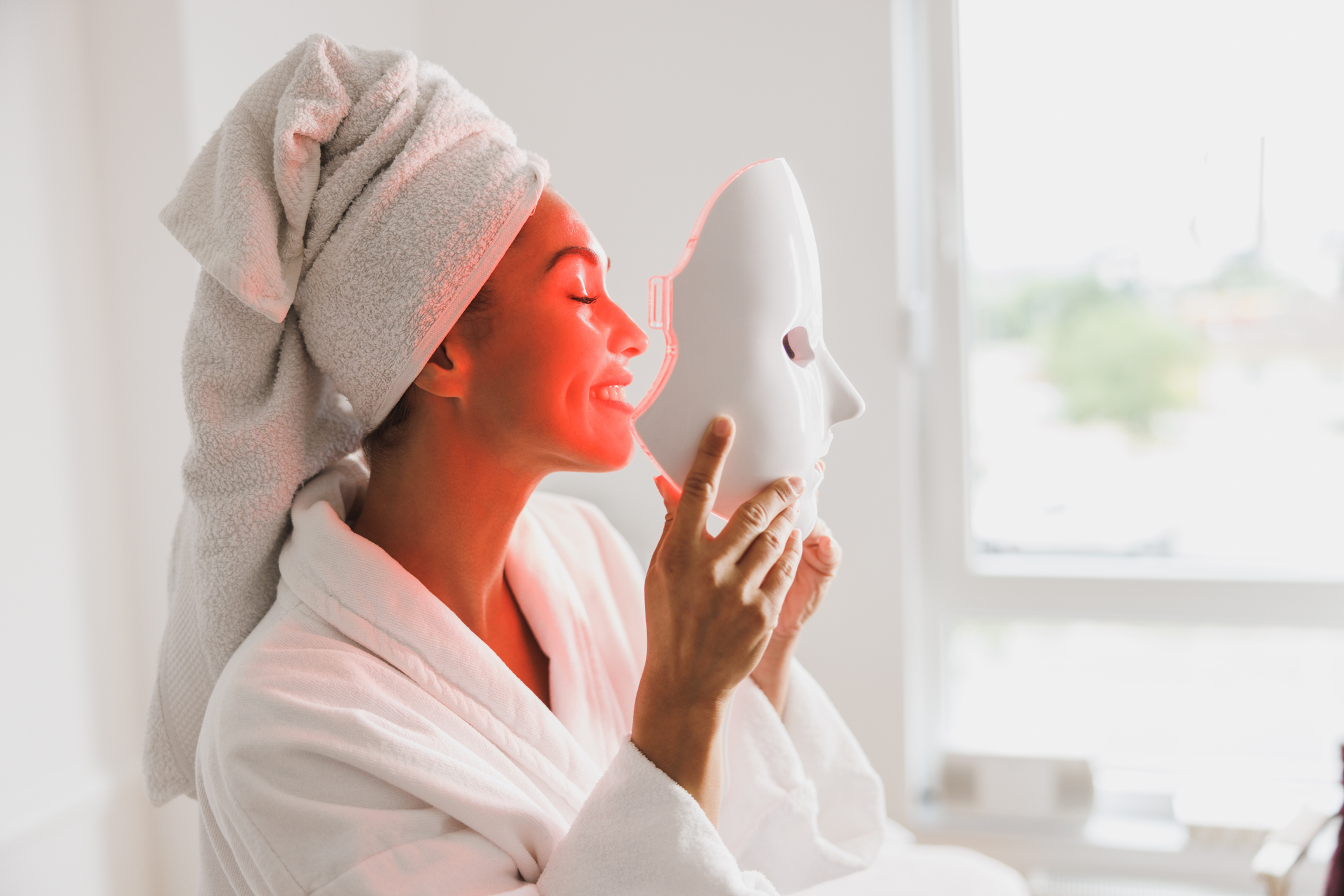
One of the biggest mistakes consumers make is assuming every LED mask produces the same results.
Unfortunately, that isn’t true.
Several factors determine how effective a device may be, including:
- The wavelengths it uses
- Irradiance (light intensity)
- Energy delivered to the skin (fluence)
- Treatment time
- Number and placement of LEDs
- FDA clearance for its intended use
- Overall build quality
Many inexpensive at-home masks advertise “red light therapy,” but they may not deliver the same wavelengths or energy levels used in clinical studies.
Professional medical-grade systems are designed to deliver consistent therapeutic doses of light using wavelengths that have been researched for specific applications.
Some professional devices also use pulsed LED light rather than continuous light. While early research suggests pulsed light may offer advantages for certain applications, there is currently no clear scientific consensus that pulsed LED is superior for every skin concern. Choosing a quality device with clinically studied wavelengths is generally far more important than whether the light is pulsed or continuous.
Researchers also emphasize that treatment success depends on factors such as wavelength, irradiance (power density), energy delivered to the tissue, and treatment duration—not simply whether a device advertises “red light therapy.”
Is Professional LED Better Than an At-Home Device?
Home LED devices have improved significantly over the past several years and can be a helpful addition to a consistent skincare routine.
Professional LED systems, however, generally offer several advantages:
- Higher-quality LEDs
- More consistent energy delivery
- Larger treatment areas
- Clinically studied wavelengths
- Customized treatment protocols
- Professional guidance based on your skin concerns
If you’re considering purchasing an at-home device, look beyond the marketing claims. Pay attention to the wavelengths used, treatment recommendations, FDA clearance when appropriate, and the overall quality of the device.
Is LED Light Therapy Right for You?
LED Light Therapy may be an excellent option if you’re looking to improve:
- Acne
- Oily skin
- Inflammation
- Fine lines and wrinkles
- Early signs of aging
- Healing after professional treatments
- Acne scars (as part of a comprehensive treatment plan)
- Hair thinning
Because LED Light Therapy is gentle, non-invasive, and requires little to no downtime, it can often be incorporated into customized treatment plans for many skin types and tones.
The most effective treatment plan, however, depends on your individual skin concerns. A professional consultation can help determine which wavelengths—and which combination of treatments—are most appropriate for your goals.
Book a Skin Consultation + Treatment
Frequently Asked Questions
How often should I have LED Light Therapy?
Most treatment plans begin with one to two sessions per week for several weeks, followed by maintenance treatments based on your skin concerns and goals.
Does LED Light Therapy hurt?
No. LED Light Therapy is painless. Most people find the treatment relaxing and comfortable.
Is LED Light Therapy safe for darker skin tones?
Yes. Because LED Light Therapy does not target pigment the way many lasers do, it is generally considered safe for most skin tones when used appropriately.
Can LED Light Therapy replace microneedling?
No. While LED Light Therapy supports healing and collagen production, it does not create the controlled collagen stimulation that microneedling provides. The two treatments often complement each other and are frequently combined.
How long does it take to see results?
Some people notice improvements in inflammation and healing within a few treatments. Improvements in acne, collagen production, and hair growth typically require consistent treatments over several weeks or months.
Final Thoughts
LED Light Therapy is much more than simply “red light therapy.” Different wavelengths of light produce different biological effects, which is why understanding the difference between blue light, red light, near-infrared light, and far-infrared light is so important.
Whether your goal is clearer skin, healthier aging, improved healing, or better support for hair growth, choosing the right wavelength—and the right device—can make all the difference.
At Celebrity Skin Scottsdale, we customize every treatment plan based on your skin concerns, goals, and overall skin health because no single wavelength or treatment is right for everyone.