
By Jennifer Swink | Celebrity Skin
Chemical peels are professional exfoliation treatments that create controlled exfoliation and skin renewal to improve concerns such as texture, pigmentation, acne, sun damage, fine lines, and overall skin quality. But a chemical peel isn’t one specific treatment. Peels range from very light exfoliation with little to no downtime to medium-depth and deep treatments that reach farther into the skin and require considerably more recovery.
The right chemical peel depends on your skin type and tone, the condition you’re treating, the depth of correction needed, your tolerance for downtime, and whether the peel is being performed alone or incorporated into another treatment.
And despite the name, chemical peels aren’t a new or particularly modern concept.
Chemical Peels Aren’t New: From Ancient Egypt to Modern Skincare
The word “chemical” can make chemical peels sound harsh, unhealthy, or even a little scary.
But forms of chemical exfoliation have been used for thousands of years.
Ancient Egyptians used sour milk as a skin treatment—an early form of exfoliation using naturally occurring lactic acid, an alpha-hydroxy acid that is still used in modern skincare and chemical peels today.
Today, of course, professional chemical peels are much more sophisticated. We can control the ingredients, concentration, pH, application, number of layers, and depth of treatment much more precisely.
But the basic idea remains remarkably similar: controlled exfoliation can help improve the appearance and condition of the skin.
Why the Word “Chemical” Shouldn’t Scare You
Everything is made of chemicals—including water.
In skincare, the word “chemical” simply describes how the exfoliation is being accomplished.
Unlike microdermabrasion or dermaplaning, which physically remove surface cells, chemical exfoliants use ingredients such as alpha-hydroxy acids, beta-hydroxy acids, TCA, and other professional peeling agents to create controlled exfoliation at different depths.
That doesn’t mean every chemical peel is gentle.
It also doesn’t mean every chemical peel is aggressive.
“Chemical peel” is an umbrella term.
A very light peel incorporated into a facial can be completely different from a medium-depth corrective peel, just as a mild at-home exfoliating acid is completely different from a professionally applied resurfacing treatment.
That’s why asking, “Are chemical peels good for your skin?” isn’t quite enough.
A better question is:
Which chemical peel is appropriate for your skin?
How Does a Chemical Peel Work?
Chemical peels work by applying a carefully selected exfoliating solution to the skin to create a controlled response.
With superficial peels, the primary effect occurs within the epidermis. Excess surface cells are loosened and removed, followed by epidermal renewal.
As peel depth increases, the treatment can produce changes deeper within the skin.
A clinical review of chemical peeling describes peels as superficial, medium, or deep according to their depth of action and notes that superficial peels are used for concerns including acne, melasma, uneven pigmentation, and photodamage. Greater peel depth can produce greater clinical change, but it also increases healing time and the potential for complications.
Read the scientific review on chemical peels and their clinical applications
This is why different chemical peels can accomplish very different things.
A light peel may be used to brighten dull skin, reduce surface buildup, improve mild pigmentation, or help manage acne.
A medium-depth peel may be selected when we’re trying to produce more significant improvement in sun damage, pigmentation, texture, fine lines, or superficial scarring.
Greater depth can create greater correction—but it also generally means more downtime and greater potential for complications.
The goal should never simply be to choose the strongest peel available. It should be to choose the appropriate depth for the skin and the problem we’re trying to correct.
For a broader look at chemical, mechanical, and enzyme exfoliation, read Everything You Need to Know About the Different Types of Exfoliation.
Light vs. Medium vs. Deep Chemical Peels
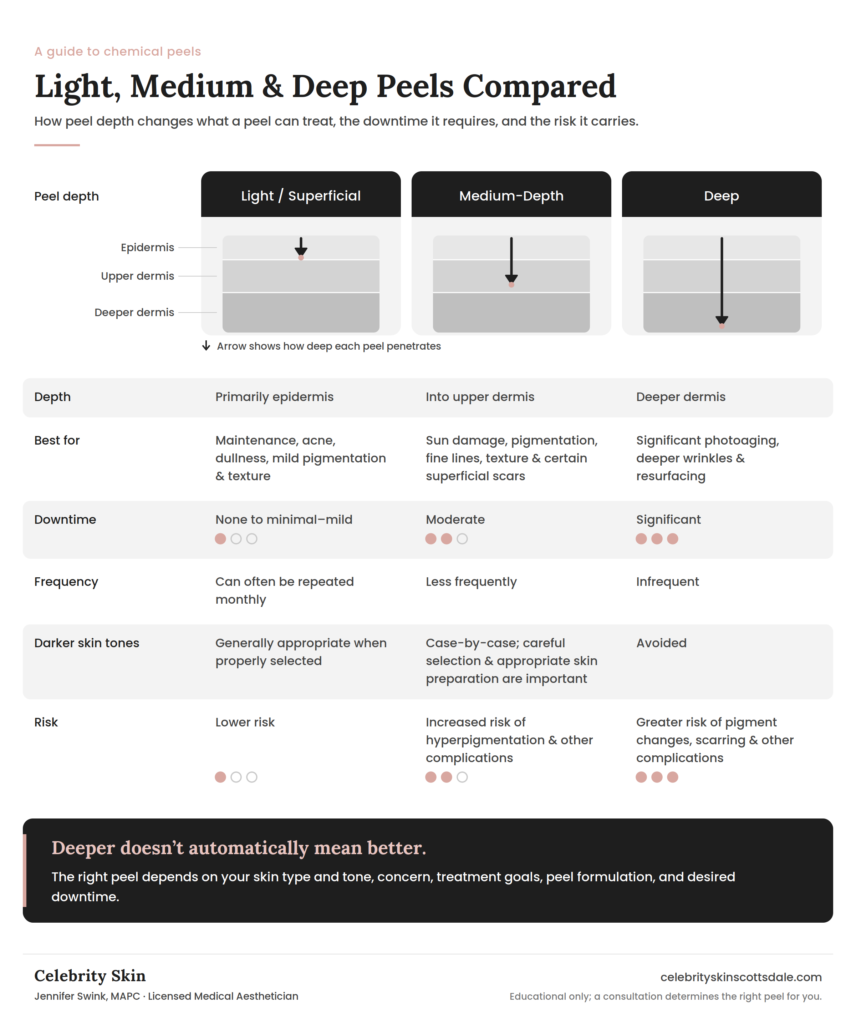
Chemical peels are generally classified according to how deeply they affect the skin.
Superficial or Light Chemical Peels
Light peels primarily work within the outer layers of the skin and can be used for regular skin maintenance as well as mild corrective treatment.
Depending on the peeling agent, they may help improve:
- Dullness
- Rough texture
- Dry surface buildup
- Mild pigmentation
- Post-inflammatory hyperpigmentation
- Acne and congestion
- Uneven skin tone
- Early signs of sun damage
- Mild fine lines
Because they create less injury, light peels generally involve less downtime and can usually be repeated more frequently than deeper peels.
They can also be incorporated into other treatments, including facials and certain microneedling protocols when appropriate.
Medium-Depth Chemical Peels
Medium-depth peels penetrate farther and create a more significant controlled injury and renewal response.
They may be used for:
- More noticeable sun damage
- Brown spots and uneven pigmentation
- Fine lines and wrinkles
- Rough or uneven texture
- Certain superficial scars
- More significant photoaging
- Overall skin rejuvenation
We also have scientific evidence showing what happens inside the skin after a medium-depth peel.
In a histologic study of photodamaged human skin, researchers examined the skin before and after a medium-depth 35% TCA peel. They found a marked increase in type I collagen, increased activated fibroblasts, and other structural changes following treatment.
See the study on medium-depth chemical peels and dermal collagen
This helps explain why medium-depth chemical peels can provide more significant correction than a light surface peel.
Because these peels reach deeper, they also require more recovery and careful client selection.
Learn more about Medium-Depth Chemical Peels in Scottsdale.
Deep Chemical Peels
Deep chemical peels penetrate much farther into the skin and can produce significant resurfacing.
They also carry substantially greater downtime and risk and are not appropriate for every skin type or every client.
Deep peels are very different from the light and medium-depth chemical peels most people encounter in routine professional skincare. They should not be treated as simply a “stronger version” of a regular facial peel.
With chemical peels, stronger isn’t automatically better.
What Are the Proven Benefits of Chemical Peels?
One reason chemical peels have remained so useful for so long is their versatility.
A major clinical review of chemical resurfacing reports potential benefits for conditions including acne, melasma, wrinkles, photodamage, photoaging, pigmentation disorders, and acne scars, with the type and depth of peel determining what can realistically be treated.
Read the medical review of chemical peels and their proven applications
Depending on the type and depth of peel, they may help improve:
- Dull skin
- Rough texture
- Dry-looking surface buildup
- Acne and clogged pores
- Post-acne pigmentation
- Hyperpigmentation
- Melasma
- Sun damage
- Brown spots
- Uneven skin tone
- Fine lines
- Signs of photoaging
- Certain superficial acne scars
- Overall skin clarity and radiance
Some of these concerns can be addressed with relatively superficial exfoliation. Others require a more corrective approach.
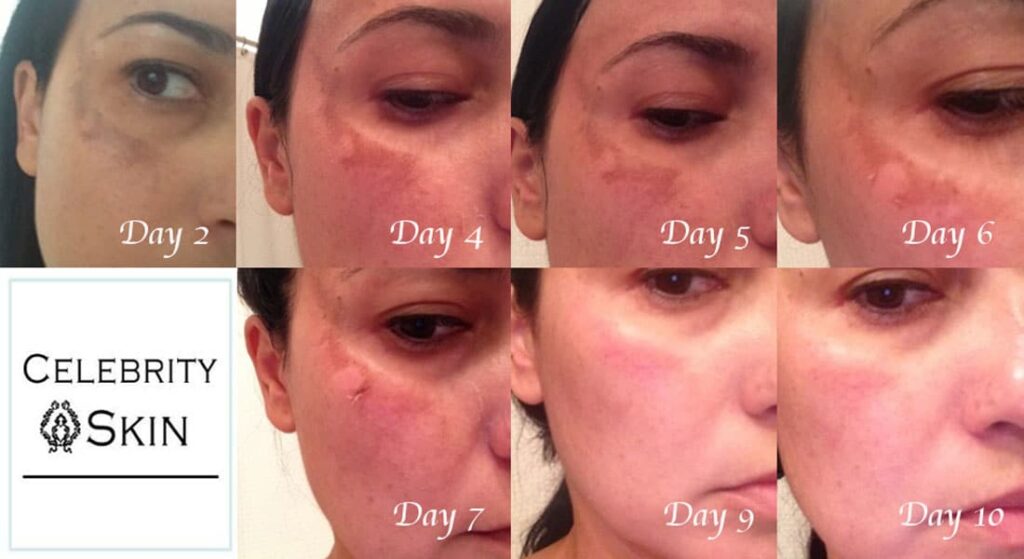
Chemical peels can be an effective option for pigmentation and uneven skin tone in melanin-rich skin when the peel and depth are appropriately selected.
This is why two people can both say they “had a chemical peel” and have completely different experiences and results.
If My Skin Is Dry, Why Would I Exfoliate It?
This sounds contradictory at first.
If your skin is dry, shouldn’t you just add more moisturizer?
Sometimes hydration is exactly what the skin needs. But excess dead surface-cell buildup can also contribute to skin that feels rough, flaky, dull, and difficult to keep looking hydrated.
Healthy skin naturally sheds surface cells through a process called desquamation. When that process becomes less efficient because of age, dehydration, environment, or other factors, dead cells can accumulate on the surface.
Applying more and more moisturizer over excessive surface buildup doesn’t necessarily address the entire problem.
Appropriate exfoliation helps remove excess dead cells so hydration and skincare can work more effectively at the skin’s surface.
But there is an important distinction:
Dry skin does not need aggressive exfoliation.
Over-exfoliating can damage the skin barrier, increase water loss, and make dryness considerably worse.
The goal is appropriate exfoliation combined with hydration and barrier support.
This is especially relevant here in Scottsdale, where our dry climate can contribute to dehydration and surface buildup.
Do Chemical Peels Stimulate Collagen?
Some do—but peel depth matters.
It’s easy to make the blanket statement that “chemical peels stimulate collagen,” but the effects of a very superficial peel shouldn’t be equated with those of a medium-depth peel.
Superficial peels primarily create changes within the epidermis.
As peel depth increases, we see more significant dermal remodeling.
As discussed earlier, researchers examining skin after a medium-depth TCA peel found a marked increase in type I collagen and activated fibroblasts following treatment.
That doesn’t mean every light peel creates the same response.
It helps explain why medium-depth chemical peels can be useful when we’re trying to address photoaging, texture, fine lines, and certain superficial scars, while a very light peel may be better suited to routine maintenance, brightness, mild pigmentation, or acne.
Does Your Skin Have to Peel for a Chemical Peel to Work?
No.
This is one of the biggest misconceptions about chemical peels.
Visible peeling is not the measurement of whether a chemical peel worked.
Some peels produce very little visible flaking. Others can produce several days of noticeable peeling.
What you see on the outside depends on the peeling agent, depth, number of layers, your individual skin, your home skincare, and other factors.
A person who barely flakes can still receive benefits from a properly selected superficial peel.
Trying to make the skin peel as much as possible is not the goal.
In fact, attempting to create excessive peeling can lead to unnecessary inflammation, barrier damage, prolonged redness, and pigmentation problems.
The goal is the controlled effect within the skin, not how dramatically you peel afterward.
Chemical Peels Aren’t Just for Your Face
Chemical peels can be used on more than facial skin.

Depending on the peel, concern, and individual, chemical exfoliation can also be used on areas such as the:
- Neck
- Chest
- Hands
- Arms
- Back
- Other appropriate areas of the body
This can be particularly useful for sun damage, pigmentation, rough texture, and signs of photoaging.
The chest and hands are often overlooked. Someone may spend years taking excellent care of their face while accumulated sun exposure on the chest, arms, and hands becomes increasingly noticeable.
However, body skin does not necessarily heal exactly like facial skin, so the peel and depth need to be selected appropriately for the area being treated.
Can Chemical Peels Help Acne and Acne Scars?
Yes, but it’s important to distinguish active acne, pigmentation left behind by acne, and true acne scars.
Chemical peels can be extremely useful in acne treatment. Depending on the peeling agent, they may help reduce congestion, improve acne and address post-inflammatory pigmentation.
They can also improve certain types of acne scarring.
But deeper rolling, boxcar, and other atrophic scars involve structural changes below the surface. Those scars may require treatments that stimulate remodeling at a deeper level, such as microneedling, or a combination of treatment methods.
There is particularly interesting research on combining these two treatments.
A 2025 systematic review and meta-analysis involving nine studies and 566 participants found that combining chemical peeling with microneedling produced greater improvement in atrophic acne scars than either chemical peeling or microneedling alone. Reported adverse effects in the included studies were generally mild and temporary.
Read the systematic review on chemical peels combined with microneedling for acne scars
This is a good example of why I don’t believe every skin concern needs to be treated with one modality.
Sometimes the better approach is using treatments together—or strategically alternating them—because they address the skin in different ways.
Can Chemical Peels Help Stretch Marks?
Certain peeling agents, including glycolic acid, have been used as part of treatment approaches for stretch marks.
However, stretch marks are changes within the dermis, not simply dead surface skin.
That means results can vary significantly.
Chemical exfoliation may be combined or alternated with treatments such as microneedling when greater remodeling is needed.
There is currently no single treatment that completely eliminates all stretch marks, so realistic expectations are important.
Can Chemical Peels Be Combined With Other Treatments?
Absolutely—and this is one of the things I like most about chemical peels.
They can be used as a standalone treatment or as one part of a larger treatment plan.
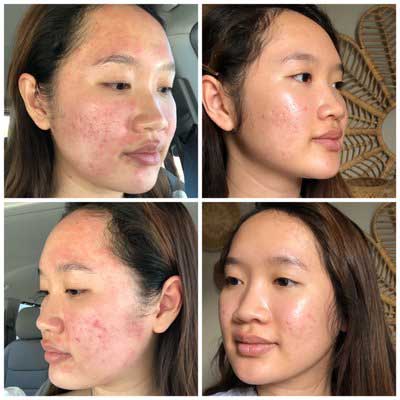
Depending on the peel, the client’s skin, and what we’re trying to accomplish, chemical peels may be incorporated with or around treatments such as:
- Facials
- Traditional crystal microdermabrasion
- Dermaplaning
- Microneedling
- LED light therapy
- Oxygenation
- Other professional skin treatments
At Celebrity Skin Scottsdale, chemical exfoliation is incorporated into several customized treatments. Light chemical peeling can also be incorporated into certain microneedling treatments.
But not every treatment should be combined at the same appointment.
Sometimes combining modalities makes sense. Other times the safest and most effective approach is to alternate treatments or allow the skin to completely recover before performing the next one.
The decision should be based on the skin—not simply how many treatments can be packed into one appointment.
Are Chemical Peels Safe for Darker Skin?
Yes, appropriately selected chemical peels can be used safely on darker and melanin-rich skin, but treatment selection matters tremendously.
Darker skin has a greater tendency to develop post-inflammatory hyperpigmentation following inflammation or injury.
That doesn’t mean darker skin shouldn’t be exfoliated.
It means we need to be thoughtful about peel selection, depth, skin preparation, treatment frequency, inflammation, sun exposure, and recovery.
A 2026 review specifically examining chemical peels in skin of color found promising results with superficial peels such as glycolic and salicylic acid for acne and pigmentary concerns, with generally favorable safety profiles. The authors also emphasized that research remains limited—particularly for deeper peels in Fitzpatrick skin types IV–VI—and that pigmentary complications require careful consideration.
Read the 2026 review of chemical peels in skin of color
In my practice, I am much more conservative as peel depth increases in darker skin because creating unnecessary inflammation can cause the very pigmentation we’re trying to improve.
If you have melanin-rich skin, read my more detailed guide: Chemical Peels for Dark Skin: Are They Safe?.
How Often Should You Get a Chemical Peel?
There isn’t one schedule for every chemical peel.
A very superficial peel used for routine maintenance can generally be performed more frequently than a medium-depth corrective peel.
Frequency depends on:
- Peel type and depth
- Skin type and tone
- Condition being treated
- How the skin responded to the previous peel
- Other professional treatments you’re receiving
- Home skincare
- Sun exposure
- Overall skin health
- How completely the skin has recovered
A series of lighter peels may be used to gradually improve a concern, while a medium-depth peel may be performed much less frequently.
Again, the word “chemical peel” alone doesn’t tell you how often you should have one.
You need to know what kind of peel you’re actually getting.
What Should You Expect After a Chemical Peel?
This depends enormously on the peel.
A light peel may leave the skin looking brighter and feeling smoother with little or no visible peeling.
Another peel may cause dryness, tightness, flaking, or several days of noticeable shedding.
A medium-depth peel generally creates a much more significant recovery period.

Downtime depends on more than just the name of the peel.
It can be affected by:
- How deep the peel penetrates
- The peeling agents and formulation used
- How many layers are applied
- Whether it was combined with another treatment
- Your skin sensitivity
- The area being treated
- Your individual healing response
- Your home skincare before and after treatment
And there is another factor that rarely gets discussed:
Downtime is subjective.
One person may be perfectly comfortable going to work with dry, flaky, visibly peeling skin. Another person may consider that significant downtime.
What you think looks bad enough to stay home may be completely different from what I think looks noticeable—or what another client considers acceptable.
That’s why I prefer to explain what your skin is likely to look and feel like, rather than simply telling everyone, “This peel has three days of downtime.”
After a peel, appropriate hydration, sun protection, and following post-treatment instructions are extremely important. Picking or prematurely removing peeling skin should be avoided.
How Do You Know Which Chemical Peel Is Right for You?
The strongest peel isn’t automatically the best peel.
Choosing the right chemical peel should take into account:
- Your skin type and tone
- Your primary concern
- Acne activity
- Pigmentation history
- Sensitivity
- Current barrier health
- Medications
- Current skincare products
- Previous treatments
- Sun exposure
- Amount of correction desired
- Amount of downtime you’re willing to accept
Someone who wants brighter, smoother skin before an event has very different needs from someone treating years of sun damage.
A client with active acne requires a different strategy from someone primarily concerned with fine lines.
And someone with melanin-rich skin and a history of post-inflammatory hyperpigmentation requires additional consideration before moving to a more aggressive peel.
If you’re unsure which professional treatment makes sense for your skin, read How Do I Know Which Skin Treatment Is Right for Me?.
Not sure which chemical peel—or combination of treatments—is right for your skin? A professional skin consultation can help determine the best approach based on your skin type, concerns, goals, and desired downtime. Schedule a Skin Consultation →
Why Chemical Peels Remain One of My Favorite Skin Treatments
In my opinion, chemical peels remain one of the gold-standard treatments for keeping skin looking fresh, healthy, and well maintained.
After more than 25 years of working with skin, I continue to use them because when the right peel is selected for the right person, skin responds extremely well.
Depending on the peel, downtime can be minimal. Results are often visible. And compared with many newer aesthetic technologies, the cost can make chemical peels realistic enough to incorporate into a regular skincare routine rather than treating them as something you can only afford to do once or twice.
They’re also incredibly versatile.
A peel can be very light and used for regular skin maintenance or more corrective when we’re addressing pigmentation, acne, sun damage, texture, fine lines, or other signs of aging.
They can be used alone.
They can be incorporated into a facial.
They can be combined with another modality when appropriate.
Or they can be alternated with treatments such as microneedling when the skin needs a different type or depth of correction.
Newer doesn’t automatically mean better.
Lasers, microneedling, and newer aesthetic technologies absolutely have an important place in professional skincare. But chemical peels have remained a staple for a reason: they are versatile, customizable, repeatable, relatively affordable, and capable of producing visible results.
And when they are appropriately selected, professionally performed, and followed by proper aftercare, chemical peels have a long history of safe and effective use.
Chemical Peels at Celebrity Skin Scottsdale
Chemical Peels at Celebrity Skin Scottsdale
At Celebrity Skin Scottsdale, chemical peels may be used as part of routine skin maintenance, incorporated into a facial, or combined and stacked with other modalities such as microneedling.
The goal is to determine what your skin needs now and how that treatment fits into your larger skincare plan.
Very often, the best long-term results come from using different treatments strategically rather than expecting one treatment to do everything.
Not Sure Where to Start?
You don’t need to know which peel or treatment to choose. Schedule a consultation and we’ll determine the best approach for your skin, concerns, and goals.
Frequently Asked Questions About Chemical Peels
Are chemical peels good for your skin?
When appropriately selected and professionally performed, chemical peels can improve skin texture, pigmentation, acne, sun damage, fine lines, and overall skin quality. The appropriate peel depends on your skin type, concerns, and treatment goals.
What is the difference between a light and medium-depth chemical peel?
Light chemical peels primarily create more superficial exfoliation and generally involve less downtime. Medium-depth peels penetrate farther and create a greater corrective response, making them useful for concerns such as more significant pigmentation, sun damage, texture, fine lines, and certain superficial scars. They also require more recovery.
Does your skin have to visibly peel for a chemical peel to work?
No. Visible peeling is not required for a chemical peel to be effective. Some superficial peels produce very little visible flaking while still improving surface texture, brightness, congestion, or pigmentation.
Can chemical peels help dark spots and sun damage?
Yes. Chemical peels are commonly used to improve uneven pigmentation, certain brown spots, post-inflammatory hyperpigmentation, and signs of photodamage. The appropriate peel depends on the type and depth of pigmentation and your skin tone.
Can chemical peels help acne scars?
Chemical peels can improve certain superficial acne scars and post-acne pigmentation. Deeper atrophic scars may require additional treatments such as microneedling or a combination approach.
Can you get a chemical peel on your chest, hands, or arms?
Yes. Chemical peels are not limited to the face. Depending on the peel and skin, they can be used on the neck, chest, hands, arms, back, and other appropriate areas to improve concerns such as sun damage, pigmentation, and rough texture.
Are chemical peels safe for darker skin?
Yes, but peel selection and depth are particularly important. Darker skin is more susceptible to post-inflammatory hyperpigmentation following excessive inflammation, so superficial peels are generally approached differently from deeper corrective treatments.
How often should you get a chemical peel?
It depends on the peel. Light superficial peels may be performed as a series or incorporated more regularly into a skincare routine, while medium-depth peels require considerably more recovery and are performed less frequently. Your skin should be fully assessed before determining the appropriate schedule.
Can chemical peels be combined with microneedling or other treatments?
Yes, certain chemical peels can be incorporated into treatment plans that include microneedling, microdermabrasion, dermaplaning, facials, or LED light therapy. Whether treatments should be performed together or spaced apart depends on the peel, the other modality, your skin, and your recovery needs.
The Bottom Line
Chemical peels have been used in one form or another for thousands of years, and they remain relevant because they work at multiple levels depending on how they’re used.
A chemical peel can be a gentle part of routine skin maintenance or a more corrective treatment for pigmentation, acne, sun damage, texture, fine lines, and certain types of scarring.
It can be used on the face or body.
It can stand alone or be incorporated into a larger treatment plan.
And it doesn’t have to produce dramatic visible peeling to be effective.
The most important thing to understand is that “chemical peel” is a general term—not one standardized treatment.
The right peel is the one that provides enough exfoliation or correction to accomplish your goals without unnecessarily over-treating your skin.
If you’re considering a chemical peel and aren’t sure which type or depth is appropriate, a professional consultation can help determine the best approach based on your skin tone, condition, concerns, lifestyle, and goals.