
By Jennifer Swink | Celebrity Skin
If you’re comparing dermaplaning vs. microdermabrasion, both are professional forms of mechanical exfoliation that remove dead surface skin cells, smooth and brighten the skin, and can help skincare products penetrate more effectively—with little to no downtime. The biggest difference is that dermaplaning also removes fine facial hair, or “peach fuzz,” but is generally not ideal for acne-prone or actively breaking-out skin. Microdermabrasion uses crystals and suction to provide more intensive exfoliation and is often the better choice for rough skin texture, mild congestion, clogged pores, and acne-prone skin.
Neither treatment is better for everyone. The right choice depends on your skin, your concerns, and what you’re trying to accomplish.
Table of Contents
Dermaplaning vs. Microdermabrasion at a Glance
| Dermaplaning | Crystal Microdermabrasion | |
|---|---|---|
| Type of exfoliation | Mechanical | Mechanical |
| How it works | Sterile surgical blade | Fine crystals + suction |
| Removes dead surface skin | Yes | Yes |
| Removes peach fuzz | Yes | No |
| Rough texture/dullness | Yes | Yes |
| Mild congestion | Some benefit | Particularly useful |
| Acne-prone skin | Generally not recommended | Often appropriate |
| Active acne | Avoid over active breakouts | Can be used with some types of acne; modify or avoid with highly inflamed or cystic lesions |
| Fine lines/photoaging | Primarily surface smoothing | Clinical research supports improvement with a series |
| Uneven pigmentation | Can improve surface brightness | Research supports improvement in some types of dyschromia and photodamage |
| Downtime | Little to none | Little to none |
| Can be combined with other treatments | Yes | Yes |
| Express or facial treatment | Both | Both |
What Is Dermaplaning?
Dermaplaning is a form of mechanical exfoliation that uses a sterile surgical blade held at a controlled angle to remove accumulated dead surface skin cells and fine vellus hair, commonly called peach fuzz.
The immediate result is exceptionally smooth skin. Removing surface buildup and fine facial hair can also make the skin appear brighter and allows makeup to apply more smoothly.
This also makes dermaplaning an excellent treatment before professional photos, headshots, weddings, or other special events. Fine facial hair can catch light and become more noticeable in high-resolution photography, particularly in close-up images. Removing peach fuzz and dead surface skin creates a smoother-looking surface and helps foundation and other makeup apply more evenly.
Unlike microdermabrasion, there is surprisingly little published clinical research evaluating dermaplaning as a stand-alone cosmetic treatment. However, a lack of published research doesn’t mean clients don’t see an immediate cosmetic benefit. Dermaplaning remains one of the most requested professional exfoliation treatments because the results are immediately visible—the skin looks and feels smoother and brighter, peach fuzz is removed, and makeup applies beautifully. Many clients simply love the way their skin looks and feels after a dermaplaning treatment.
Where dermaplaning becomes especially useful is when it is incorporated into a more comprehensive facial or treatment plan. Depending on the skin, it can be combined with other appropriate treatments such as chemical exfoliation, hydration, oxygenation, or LED light therapy.
What Is Microdermabrasion?
Microdermabrasion developed as a much more superficial and gentler alternative to traditional dermabrasion. At Celebrity Skin Scottsdale, I use traditional crystal microdermabrasion, which directs a controlled stream of fine crystals across the skin while suction removes the crystals and exfoliated skin cells.
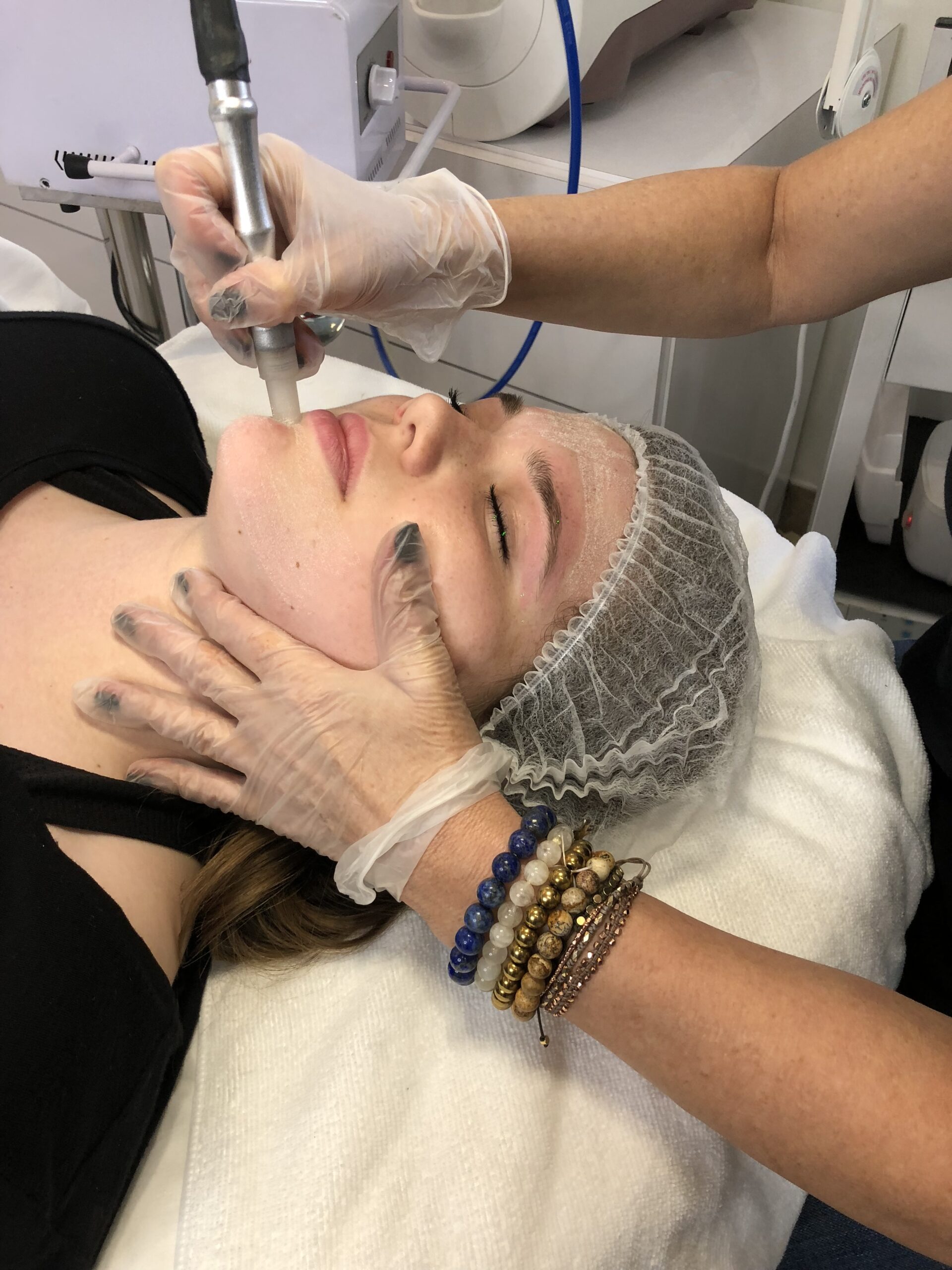
I have used microdermabrasion for many years and continue to prefer traditional crystal microdermabrasion because of the level of exfoliation I can achieve and customize for the individual client.
Microdermabrasion has also been studied considerably more than dermaplaning. Research on crystal microdermabrasion has documented improvements in fine lines, skin roughness, uneven pigmentation, and signs of photodamage after a series of treatments. Studies have also demonstrated changes within the epidermis and dermis associated with skin renewal and collagen remodeling.
Research examining the individual components of traditional microdermabrasion found that crystal abrasion combined with suction produced a stronger molecular response than suction alone, supporting the importance of the abrasive component of the treatment.
Which Is Better for Peach Fuzz?
This one is easy: dermaplaning.
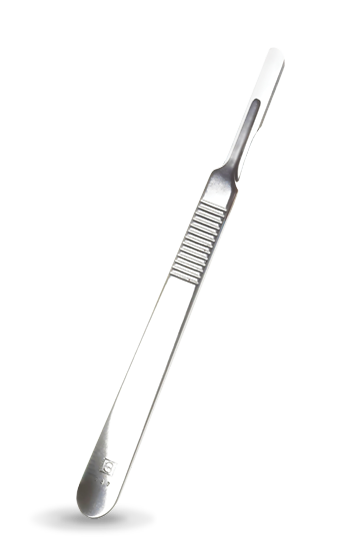
Dermaplaning removes both dead surface skin cells and fine vellus hair. Microdermabrasion exfoliates the skin but does not remove facial hair.
And no, dermaplaning does not cause peach fuzz to grow back thicker or darker. Cutting hair at the skin’s surface does not change the hair follicle or turn fine vellus hair into coarse terminal hair.
Which Is Better for Congestion and Rough Texture?
When a client’s primary concern is dead skin buildup, rough texture, enlarged-looking pores, or mild congestion, I often prefer microdermabrasion.
The combination of crystal abrasion and suction allows the intensity of the exfoliation to be adjusted according to the condition of the skin.
Dermaplaning is also excellent for surface texture, particularly when dry, flaky skin and peach fuzz are contributing to a rough or dull appearance.
This is a good example of why dermaplaning vs. microdermabrasion isn’t necessarily about which treatment is better overall. It’s about which type of exfoliation is better suited to what we’re trying to accomplish.
If you’d like to understand how these treatments compare with other exfoliation methods, read my guide to the different types of exfoliation.
What About Fine Lines, Pigmentation and Sun Damage?
This is one area where the differences in the published research become more apparent.
Clinical research on repeated crystal microdermabrasion treatments has reported improvements in fine lines, dyschromia, uneven pigmentation, and signs of photodamage. Research examining the skin after treatment has also demonstrated changes within the epidermis and dermis, including increased collagen and elastic fibers.
That doesn’t make microdermabrasion a replacement for treatments such as chemical peels, microneedling, or laser when more significant correction is needed. Microdermabrasion is a relatively superficial treatment, and improvements generally require a series of treatments.
Dermaplaning can immediately make dull skin look smoother and brighter by removing surface buildup and fine facial hair, but there is far less published clinical evidence showing that dermaplaning itself produces deeper changes in pigmentation, collagen, or photoaging.
What About Acne and Acne-Prone Skin?
This is an important difference between dermaplaning and microdermabrasion.
Dermaplaning is generally not a good choice for acne-prone skin, particularly when there is active or inflammatory acne. Because a surgical blade is passed directly across the surface of the skin, it can irritate acne lesions and isn’t the type of exfoliation I typically choose for clients who are actively breaking out.
Microdermabrasion, on the other hand, can be used on many clients with acne and acne-prone skin. The crystal exfoliation and suction can be particularly helpful for removing dead skin buildup and addressing clogged pores and non-inflamed congestion.
That doesn’t mean microdermabrasion is appropriate for every type or severity of acne. With highly inflamed, cystic, open, or irritated acne, treatment may need to be modified or postponed. But for many acne-prone clients, microdermabrasion is a much more useful exfoliation option than dermaplaning.
This is also why the type of acne matters. Clogged pores, inflammatory acne, post-inflammatory pigmentation, and acne scars are different concerns and shouldn’t all be treated the same way. Learn more about my approach to acne treatments in Scottsdale.
Can Dermaplaning and Microdermabrasion Be Combined With Other Treatments?
Absolutely. In fact, this is one of the ways I use both treatments most often.
Dermaplaning and microdermabrasion can be stand-alone express treatments, incorporated into a customized facial, or used as part of a carefully selected combination treatment.
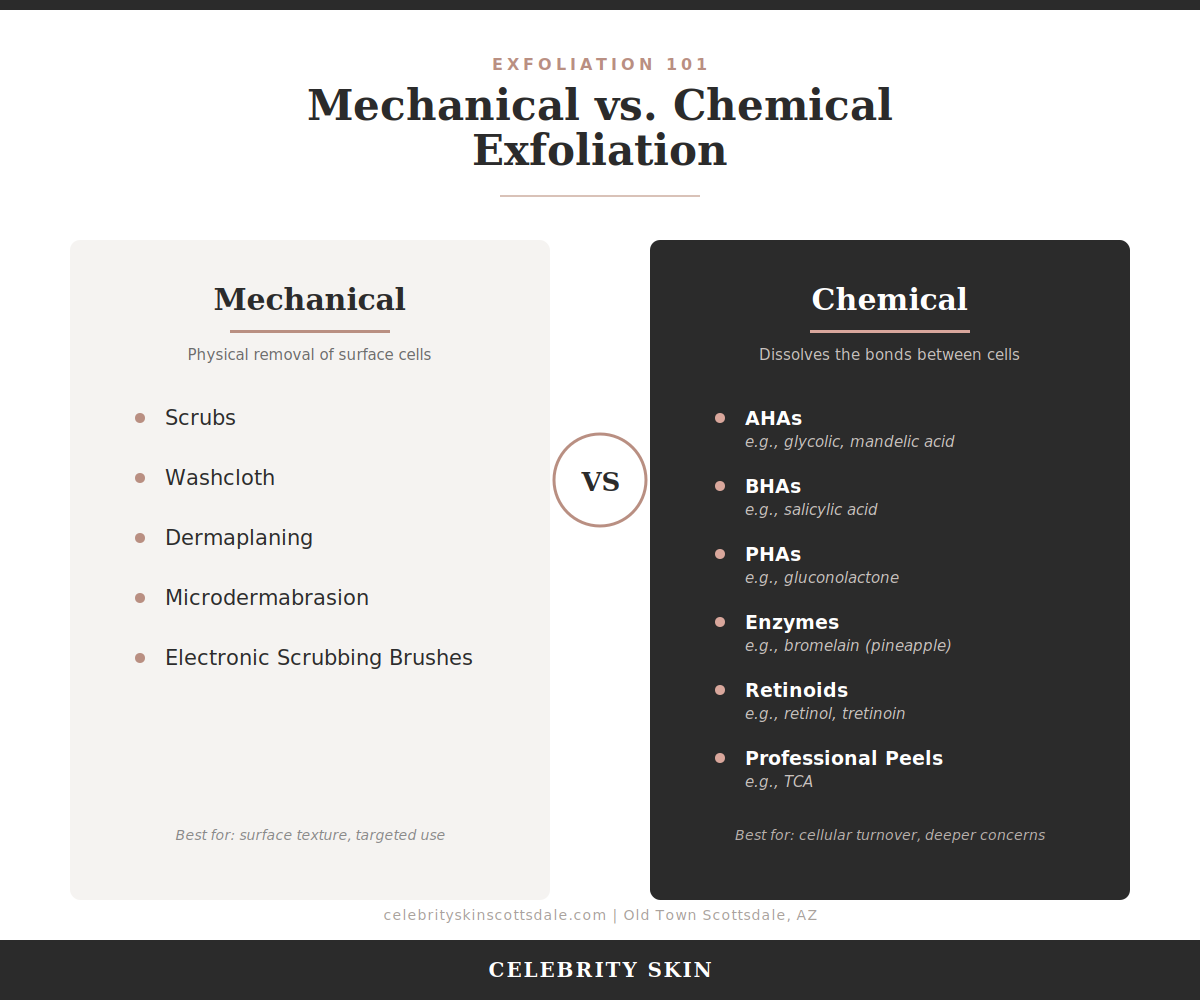
Depending on the client’s skin and what we are trying to accomplish, I may combine them with treatments such as:
- Customized chemical peels
- Enzyme exfoliation
- Oxygenation
- Celluma® LED Light Therapy
- Hydrating or calming treatments
There is also published research examining microdermabrasion combined with superficial chemical peels. Microdermabrasion can be performed before an appropriate superficial peel to increase exfoliation. However, combining exfoliation methods also increases the intensity of the overall treatment, which is why the strength of the peel, amount of exfoliation, condition of the skin, and client’s tolerance all matter.
This is the concept behind treatment stacking. The goal isn’t to perform as many treatments as possible. It’s to select treatments that complement one another and address different aspects of the skin without unnecessarily irritating it.
Both dermaplaning and microdermabrasion can also be performed as quick 20-minute express treatments when a full facial isn’t necessary. You can see these options on my treatment pricing page.
Can You Combine Dermaplaning and Microdermabrasion Together?
Yes. For appropriate skin, I may use both dermaplaning and microdermabrasion in the same treatment.
They don’t accomplish exactly the same thing. Dermaplaning removes surface buildup and vellus hair, while crystal microdermabrasion provides additional controlled mechanical exfoliation.
Depending on the skin, I may then incorporate a customized chemical peel, oxygenation, LED light therapy, or another compatible treatment.
This is the approach behind my Celebrity Skin Signature Treatment, which combines microdermabrasion, dermaplaning, chemical exfoliation, oxygenation, and Celluma® Light Therapy in one appointment. You can learn more about the Celebrity Skin Signature Treatment and other clinical skincare services.
Who Is Not a Good Candidate?
Although dermaplaning and microdermabrasion are relatively gentle treatments, neither should be performed indiscriminately.
Treatment may need to be modified, postponed, or avoided with:
- Active inflammatory or cystic acne, particularly with dermaplaning
- Open wounds or broken skin
- Active cold sores or other skin infections
- Significant sunburn
- Severely irritated or compromised skin
- Certain active inflammatory skin conditions
- Recent procedures or medications that make the skin unusually fragile or sensitive
The treatment being performed in combination also matters. Skin that can safely tolerate dermaplaning or microdermabrasion alone may not necessarily tolerate either treatment combined with a chemical peel or another exfoliating procedure.
Frequently Asked Questions
Is dermaplaning or microdermabrasion better?
Neither is universally better. When comparing dermaplaning vs. microdermabrasion, dermaplaning has the advantage of removing peach fuzz along with dead surface skin, while crystal microdermabrasion provides adjustable mechanical exfoliation using crystals and suction. The better choice depends on your skin and goals.
Does dermaplaning make facial hair grow back thicker?
No. Dermaplaning cuts fine vellus hair at the skin’s surface. It does not change the hair follicle, so it does not cause peach fuzz to become thicker or darker.
Is dermaplaning or microdermabrasion better for acne-prone skin?
For many acne-prone clients, I prefer microdermabrasion. Dermaplaning isn’t generally my first choice for acne-prone or actively breaking-out skin because a blade is passed across the surface. Microdermabrasion can often be customized for clogged pores, congestion, and certain types of acne, although highly inflamed or cystic acne may require a different approach.
Can I get dermaplaning or microdermabrasion with a chemical peel?
Yes, when appropriate. Either may be incorporated with certain superficial chemical peels to increase surface exfoliation. Because combining exfoliation methods increases treatment intensity, the combination should be customized to the client’s skin.
Can dermaplaning and microdermabrasion be done together?
Yes, for appropriate skin. I often combine different forms of exfoliation when there is a reason to do so. Dermaplaning, microdermabrasion, chemical exfoliation, oxygenation, and LED light therapy can each play a different role within a customized treatment.
Dermaplaning vs. Microdermabrasion: Which Should You Choose?
The biggest difference between dermaplaning vs. microdermabrasion isn’t that one is better than the other—it’s what each treatment does best.
If removing peach fuzz and creating an exceptionally smooth surface are priorities, dermaplaning may be the better choice. If your primary concerns are dead skin buildup, rough texture, mild congestion, acne-prone skin, or signs of photodamage, I may favor traditional crystal microdermabrasion.
And sometimes the answer is both.
Either treatment can be performed alone, incorporated into a facial, or strategically combined with other professional treatments based on what your skin needs.
If you’re unsure which type of exfoliation is best for your skin, an in-person or virtual consultation can help determine which treatment—or combination of treatments—makes the most sense for your skin and goals.