
By Jennifer Swink | Celebrity Skin
The connection between gut health and skin is one of the most powerful — and most overlooked — factors driving chronic acne. If you’ve tried every cleanser, serum, and spot treatment and still can’t get clear, your gut is likely the real source of the problem. Research now confirms that gut health and skin are directly linked through gut dysbiosis, leaky gut syndrome, and systemic inflammation. In this post, we break down exactly why your digestive system drives breakouts, what’s throwing your gut out of balance, and what the warning signs of leaky gut actually look like.
Part 2: How to Heal Your Gut to Clear Your Skin — Probiotics, Prebiotics & What Actually Works covers the solution side. For now, let’s start with the why.
Table of Contents
1. What Your Gut Can Tell You
2. What’s Destroying Our Gut Health?
3. The Top Gut Disruptors: Diet, Stress, Toxins & Medications
4. Leaky Gut Syndrome and Acne
5. Frequently Asked Questions
6. Ready to Dig Deeper?
💡 WordPress Tip: Install “LuckyWP Table of Contents” or “Easy Table of Contents” plugin — RankMath integrates with both automatically to satisfy the TOC requirement.
What Your Gut Can Tell You About Gut Health and Skin
One of the main areas our body takes a major hit is in our digestive health. An unhealthy gut is the real culprit behind much of the inflammation we experience — including the kind that shows up on your skin.
But what exactly do we mean by “gut?” Your gut encompasses your entire gastrointestinal tract from mouth to anus — and all the organs along the way that help keep you alive and healthy. We are, at our core, a microbiome: a living ecosystem consisting largely of bacteria that serve vital roles in digestion, immunity, and overall function.
Your gut bugs — also known as intestinal flora — are just as important to your health as your brain. Diverse strains of beneficial bacteria help digest food and absorb nutrients, fight off harmful bacteria and viruses, and neutralize toxic substances before they can cause damage. These microscopic allies produce and release vitamins, enzymes, and neurotransmitters that keep our bodies balanced. The American Psychological Association reports that 95% of the body’s serotonin is manufactured in the gut (APA, 2023) — so when your gut suffers, your mood, sleep, and stress resilience suffer with it.
Healthy, diverse intestinal flora plays a direct role in reducing systemic inflammation. And when it comes to gut health and skin, reducing that inflammation is one of the most critical steps in clearing acne at its source. If you’re dealing with persistent breakouts, learn more about our integrative acne treatment approach.”
What’s Destroying Our Gut Health?
Here’s the hard truth: the modern food supply and environment have done serious damage to our digestive health. In my research, I’ve found it comes down largely to what we’re eating — and what we’re being exposed to every single day.
Processed foods, surplus sugars, hybridized grains, gluten, dairy, GMOs, food additives, artificial sweeteners, chlorinated and fluoridated water, pesticides, plastics, parabens, aspirin, and antibiotics all put enormous physical stress on the body. These substances don’t just cause inflammation — they actively destroy the quantity and diversity of your beneficial gut flora while feeding the growth of harmful bacteria, yeast, parasites, and viruses that wreak havoc on your gut’s ecosystem.
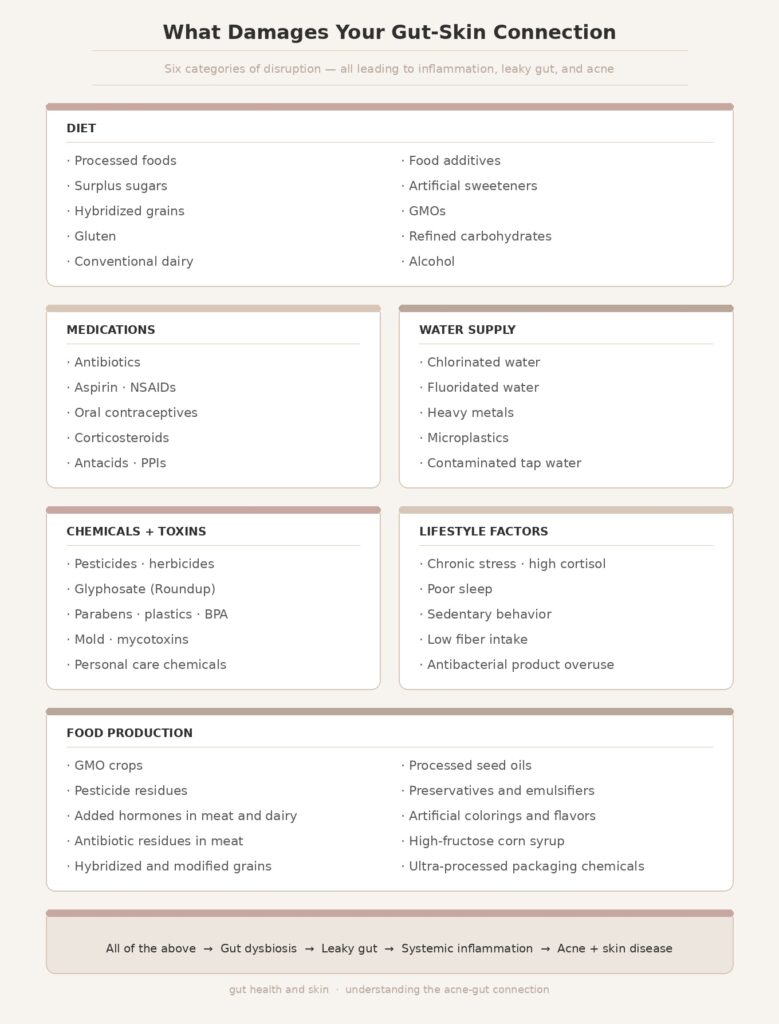
The result is a state known as gut dysbiosis — a microbial imbalance that drives systemic inflammation. Research published in Gut Microbes has found that people with acne show significantly lower populations of Lactobacillus and Bifidobacterium and higher levels of inflammatory microbes compared to clear-skinned individuals. That imbalance doesn’t stay in your digestive tract — it sends inflammatory signals throughout your entire body, and onto your skin.
Over time, this microbial disruption can lead to one of the most consequential — and overlooked — conditions in integrative medicine: Leaky Gut Syndrome.
The Top Gut Disruptors: Diet, Stress, Toxins & Medications
Understanding what throws your gut out of balance is just as important as understanding why it matters. These are the most common culprits — many hiding in plain sight in everyday life.
1. Diet

What you eat is the single biggest lever you have over your gut microbiome:
- Sugar and refined carbohydrates — feed harmful bacteria and yeast like Candida while starving beneficial strains. High-glycemic diets are directly associated with acne severity.
- Ultra-processed and fast foods — stripped of fiber, loaded with additives that disrupt the gut lining
- Gluten and hybridized grains — can trigger intestinal inflammation and permeability in sensitive individuals
- Conventional dairy — a common trigger for gut irritation due to casein proteins and added hormones
- Artificial sweeteners — shown to negatively alter microbiome composition even in small amounts
- Alcohol — directly damages the intestinal lining and reduces bacterial diversity
- GMOs — often paired with glyphosate herbicides linked to gut dysbiosis and increased intestinal permeability
2. Medications
- Antibiotics — wipe out beneficial and harmful bacteria indiscriminately; dysbiosis can persist long after the course ends. Especially relevant for acne patients on long-term antibiotic therapy
- PPIs and antacids — reduce stomach acid essential for controlling bacterial overgrowth
- NSAIDs (ibuprofen, aspirin, naproxen) — damage the gut lining and increase intestinal permeability with regular use
- Oral contraceptives — alter the microbiome and deplete B vitamins and zinc that support gut and skin health
- Corticosteroids — suppress immune function and promote overgrowth of harmful organisms like Candida
3. Stress
Your gut and brain communicate through the gut-brain axis — a two-way highway involving the vagus nerve, hormones, and the nervous system. Chronic stress is one of the most underestimated threats to gut health and skin:
- Elevated cortisol reduces blood flow to the digestive tract and slows gut motility
- Stress hormones directly alter microbiome composition within hours of a stressful event
- Psychological stress has been shown to increase intestinal permeability — meaning stress alone can trigger or worsen leaky gut
- Poor sleep compounds microbial imbalance, since the microbiome follows its own circadian rhythm
4. Environmental Toxins
- Pesticides and herbicides — glyphosate acts as an antibiotic in the gut, selectively killing beneficial bacteria
- Chlorine and fluoride in tap water — antimicrobial properties can disrupt gut flora with regular consumption
- Plastics and BPA — endocrine disruptors that impair gut barrier function
- Parabens and personal care chemicals — absorbed through the skin and linked to microbiome disruption
- Heavy metals (mercury, lead, arsenic) — accumulate in the gut lining and impair barrier function over time
- Mold and mycotoxins — exposure can devastate gut flora and drive chronic inflammation
5. Lifestyle Factors
- Poor sleep — even a few nights of disrupted sleep measurably reduces microbial diversity
- Sedentary behavior — regular movement supports healthy gut motility and microbiome diversity
- Overuse of antibacterial products — reduces beneficial microbial exposure
- Low-fiber diet — fiber is the primary food source for your beneficial bacteria; without it, they literally starve
The good news? Most of these are addressable. Identifying your personal gut disruptors is the first step toward rebuilding a microbiome that supports clear, healthy skin. Understanding the link between gut health and skin puts you back in control.
Leaky Gut Syndrome and Acne: What’s the Connection?
Leaky Gut Syndrome (intestinal hyperpermeability) occurs when the tight junctions in the intestinal wall malfunction and allow food particles, chemicals, bacterial toxins, and other substances to leak directly into the bloodstream.
In a healthy gut, the intestinal lining acts as a highly selective barrier — nutrients in, harmful substances out. When that barrier breaks down, your immune system is forced into a constant state of alert. Studies published in Clinical, Cosmetic and Investigational Dermatology have directly linked increased intestinal permeability to inflammatory skin conditions including acne. That cascade of inflammation doesn’t stay internal — it erupts on your skin. This is the gut health and skin connection at its most direct.
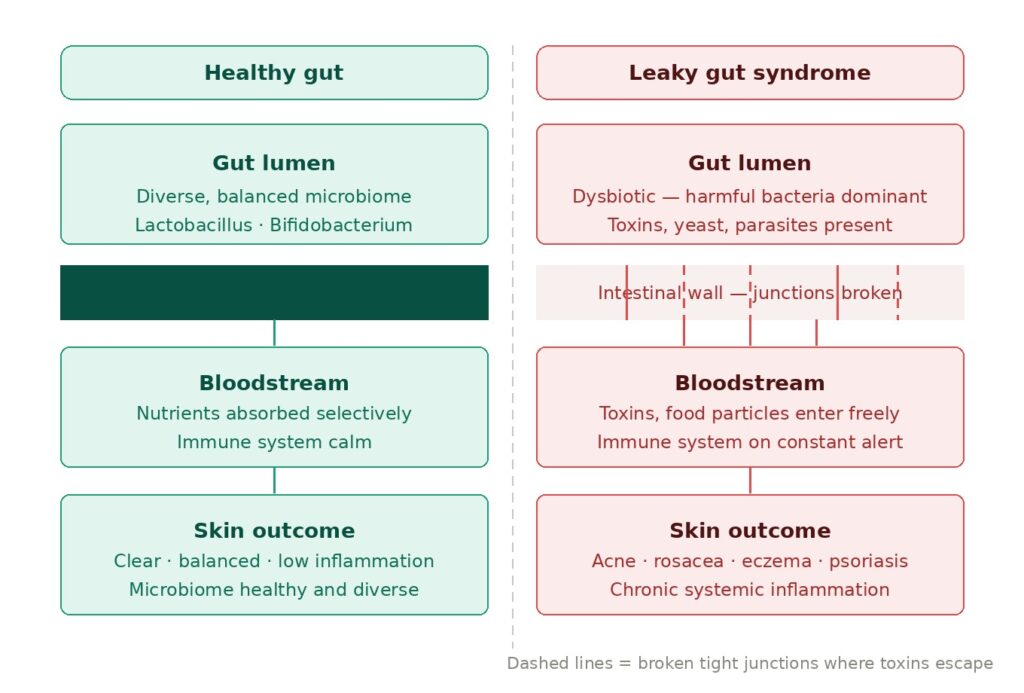
Over time, leaky gut can trigger or worsen a wide range of conditions. Acne, vitiligo, psoriasis, rosacea, eczema, scleroderma, and chronic rashes are all recognized symptoms of leaky gut. If you have any condition rooted in inflammation or immune dysregulation, intestinal permeability is likely playing a role.
Signs and Symptoms of Leaky Gut
Watch for these warning signs if you suspect your gut may be compromised:
- Bowel issues — gas, bloating, chronic constipation, diarrhea, or indigestion
- Allergies and food sensitivities — reactions that seem to be worsening over time
- Inflammatory skin conditions — acne, eczema, psoriasis, rosacea, or unexplained rashes
- Mood issues — depression, anxiety, or brain fog
- Nutrient deficiencies — especially B12, magnesium, iron, or zinc
- Recurring bladder infections
- Chronic joint and muscle pain
- Unexplained weight gain
- Fatigue that doesn’t resolve with rest
- Frequent colds or weakened immunity
“If you’re seeing several of these symptoms alongside chronic breakouts, our acne treatment program addresses both the skin and the root cause driving it.”
Important: If you’re experiencing several of these symptoms persistently, I strongly recommend speaking with your doctor. That said, don’t be surprised if your conventional physician isn’t familiar with leaky gut — it’s an area where integrative and functional medicine have led the way. If you’re not getting answers, working with an integrative practitioner can help you get to the root cause.
Frequently Asked Questions About Gut Health and Skin
Q: Is there a proven connection between gut health and skin acne?
Yes — the science is clear. Research consistently shows that people with acne have measurably different gut microbiomes than those with clear skin. The relationship between gut health and skin is now well-established in integrative and functional medicine, with gut dysbiosis, leaky gut syndrome, and intestinal inflammation all recognized as contributors to acne.
Q: What is leaky gut and how does it cause acne?
Leaky gut (intestinal hyperpermeability) occurs when the gut lining becomes compromised, allowing toxins, undigested food particles, and bacteria to enter the bloodstream. This triggers an immune response and widespread inflammation — which can manifest on the skin as acne, rosacea, eczema, and other inflammatory conditions.
Q: What are the most common causes of gut dysbiosis?
The most common causes include a diet high in sugar and processed foods, antibiotic use, chronic stress, oral contraceptives, NSAIDs, environmental toxins like pesticides and BPA, and consistently low fiber intake. Many people are unknowingly exposed to several of these simultaneously.
Q: Can healing my gut actually clear my acne?
For many people, yes. The connection between gut health and skin means that addressing dysbiosis and restoring the gut barrier can produce meaningful improvements in skin clarity that topical treatments alone cannot achieve. It’s rarely a single fix, but it addresses the root cause rather than just the symptoms.
Q: How do I know if I have leaky gut?
Common signs include bloating, gas, food sensitivities, chronic skin conditions like acne or eczema, fatigue, mood issues, recurring infections, and nutrient deficiencies. A functional medicine practitioner can run comprehensive stool analysis and intestinal permeability testing to confirm.
Scientific References
1. Gut microbiota and acne vulgaris — Gut Microbes, 2019
2. High-glycemic diet and acne severity — JAAD, 2007
3. Psychological stress and intestinal permeability — Frontiers in Neuroscience, 2017
4. Intestinal permeability and inflammatory skin disease — CCID, 2015
5. Serotonin and the gut-brain connection — American Psychological Association
Ready to Dig Deeper?
If you’re tired of chasing surface-level solutions and ready to understand what’s actually driving your skin, I’d love to help. The link between gut health and skin is where real, lasting results begin. Together we can assess your gut health, identify your personal triggers, and build a protocol that addresses the root cause — not just the breakouts.
Book a consultation with Jennifer — available virtually or in person in Old Town Scottsdale. Together you’ll identify your personal triggers and build a protocol that treats the root cause, not just the breakouts.”
Your skin is a reflection of your inner health. Let’s make both shine.
The information in this post is for educational purposes only and is not intended to replace personalized medical advice. Please consult with a qualified healthcare provider before beginning any new supplement or treatment protocol.