
By Jennifer Swink | Celebrity Skin
If you’re comparing Clear + Brilliant vs. microneedling, neither treatment is necessarily better—they are different technologies that share many of the same benefits. Both can stimulate collagen and improve fine lines, enlarged pores, uneven texture, acne scarring, pigmentation, and overall skin quality. The better choice depends on your skin type, primary concerns, treatment goals, and how your skin responds to different types of treatments.
The biggest difference is how they create controlled injury in the skin. Clear + Brilliant creates fractional controlled thermal injury using laser energy, while microneedling creates fractional controlled mechanical injury using very fine needles. Both stimulate the skin’s natural repair response, but they accomplish it in different ways.
Quick Answer: Clear + Brilliant vs. Microneedling
Clear + Brilliant is a fractional non-ablative laser, while microneedling is a fractional treatment that uses very fine needles rather than laser energy.
Both treatments stimulate collagen and skin renewal and can improve many of the same concerns. Neither is universally better. The right treatment depends on what we are trying to improve, your skin type, pigmentation risk, treatment history, and goals.
Table of Contents
Clear + Brilliant vs. Microneedling at a Glance
| Clear + Brilliant | Microneedling | |
|---|---|---|
| Technology | Fractional laser | Very fine needles |
| Type of injury | Controlled thermal injury | Controlled mechanical injury |
| Collagen stimulation | Yes | Yes |
| Fine lines | Yes | Yes |
| Enlarged pores | Yes | Yes |
| Uneven texture | Yes | Yes |
| Pigmentation | Yes | Can help, depending on cause |
| Acne scars | Can improve some scarring and texture | Especially useful for certain indented scars |
| Active acne | May be appropriate in select cases depending on the type and severity of acne | No—active inflammatory or cystic acne should be cleared before treatment |
| Numbing cream | Yes | Yes |
| Downtime | Minimal | Minimal to moderate depending on depth and treatments combined |
| Treatment stacking | Can be incorporated into a broader treatment plan | Frequently combined with peels, LED, exosomes, PDRN and other treatments when appropriate |
What Does Non-Ablative Laser Mean?
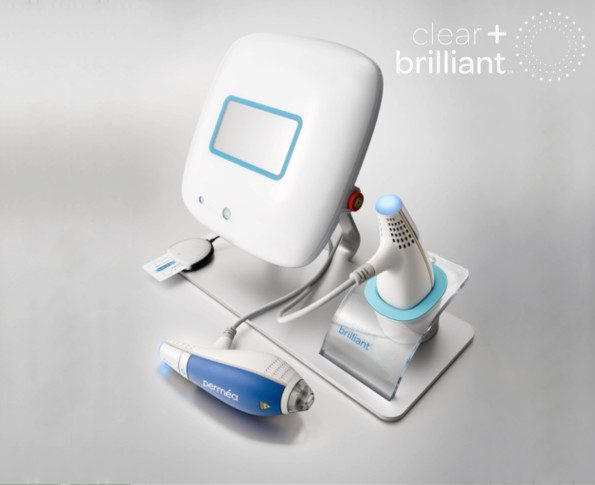
One of the most important things to understand about Clear + Brilliant is that not all lasers are the same.
Laser treatments can generally be described as ablative or non-ablative based on how they affect the skin.
Ablative lasers intentionally remove or vaporize portions of the outer layers of skin. They can create significant skin remodeling but generally involve greater inflammation, downtime, and recovery.
Non-ablative lasers deliver energy into the skin without removing the outer surface in the same way. Clear + Brilliant is a fractional non-ablative laser, meaning it treats microscopic areas of the skin while leaving surrounding tissue intact.
The FDA classifies the Clear + Brilliant Laser System as a Class II fractional laser device. This allows Clear + Brilliant to stimulate skin renewal with considerably less downtime than more aggressive ablative laser procedures.
How Does Microneedling Work?
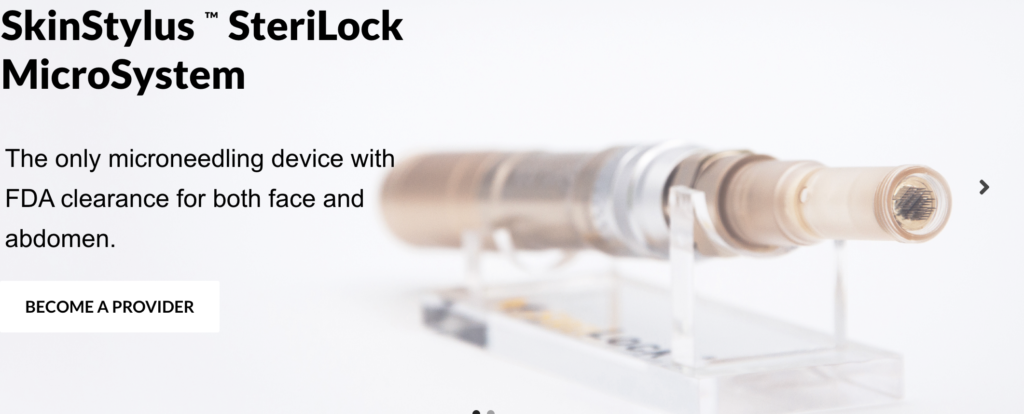
Microneedling creates fractional controlled mechanical injury rather than thermal injury.
Very fine sterile needles create thousands of microscopic treatment channels at controlled depths while leaving surrounding tissue intact. This initiates the skin’s natural wound-healing response and stimulates new collagen production and remodeling.
At Celebrity Skin Scottsdale, I use the FDA-cleared SkinStylus® microneedling device and customize treatment depth according to the area being treated, skin condition, and treatment goals.
What Is Treatment Stacking?
One advantage of microneedling is that it can be incorporated into a more comprehensive treatment plan.
When appropriate, I may combine—or “stack”—microneedling with a customized chemical peel, FDA-cleared Celluma® LED light therapy, exosomes, PDRN (salmon DNA), or other regenerative treatments.
The purpose of treatment stacking is to address multiple aspects of the skin at the same time rather than expecting one treatment to do everything. When treatments are carefully selected to complement one another, combining them can produce more comprehensive results and may help you reach your skin goals more efficiently than relying on a single treatment alone.
For example, microneedling may be used primarily for collagen remodeling, while a carefully selected chemical peel addresses pigmentation or surface texture and LED light therapy helps calm the skin and support recovery. Regenerative treatments such as exosomes or PDRN (salmon DNA) may also be incorporated to support cellular repair, hydration, collagen production, and recovery, further enhancing the overall skin-rejuvenating benefits of the treatment.
Which Is Better for Acne Scars?
For atrophic or indented acne scars, I often favor microneedling because collagen remodeling is one of the primary goals of treatment. Microneedling can be particularly helpful for rolling scars and shallow-to-moderate boxcar scars, which tend to respond better than deeper ice-pick scars. It may also improve certain atrophic surgical or traumatic scars and stretch marks. When developing an acne scar treatment plan, the type, depth, and location of the scars help determine which treatment—or combination of treatments—is most appropriate.
Deep ice-pick scars are generally more difficult to improve with microneedling alone and may require a different treatment or combination approach.
However, there is an important distinction between active acne and acne scars. We treat the active acne first and the acne scars second. Microneedling should not be performed over active inflammatory or cystic acne.
Which Is Better for Fine Lines, Pores and Skin Texture?
This is an area where both treatments can be excellent options.
Clear + Brilliant and microneedling can both stimulate collagen and improve fine lines, enlarged pores, uneven texture, and overall skin quality.
The decision may come down to your skin type, additional concerns, treatment history, pigmentation risk, and how your skin responds to thermal versus mechanical injury.
For someone primarily concerned with general skin rejuvenation, tone, pores, and early signs of aging, Clear + Brilliant may be an excellent choice. When deeper collagen remodeling or indented acne scars are a priority, I may lean more toward microneedling.
If you want to understand more about what happens after a collagen-stimulating treatment, read How Does Your Skin Build Collagen?, where I explain how fibroblasts produce and remodel new collagen following controlled injury.
What About Hyperpigmentation and Melasma?
When pigmentation is involved, choosing the right treatment becomes particularly important because not all pigmentation is the same.
Sun-related discoloration, post-inflammatory hyperpigmentation (PIH), and melasma have different underlying causes and should not automatically be treated with the same procedure.
Melasma in particular requires caution. In fact, the manufacturer of Clear + Brilliant specifically includes melasma among the skin conditions that should be evaluated during pre-treatment screening.
If pigmentation is your primary concern, identifying what type of pigmentation you have should come before choosing Clear + Brilliant, microneedling, a chemical peel, or another treatment.
What About Darker Skin Tones?
Skin type is another important consideration when comparing Clear + Brilliant vs. microneedling.
Any treatment that creates inflammation or controlled injury has the potential to trigger post-inflammatory hyperpigmentation in susceptible skin. This is particularly important in darker, melanin-rich skin tones and in anyone with a history of developing pigmentation following inflammation.
That does not mean people with darker skin cannot have advanced professional treatments. It means the device, settings, treatment depth, skin preparation, and aftercare need to be selected appropriately.
Experience treating skin of color matters, particularly when hyperpigmentation or melasma is already present.
Who Is Not a Good Candidate for Clear + Brilliant or Microneedling?
Although both Clear + Brilliant and microneedling are considered safe, minimally invasive treatments when performed appropriately, not every treatment is appropriate for every person or every skin condition.
One important difference is active acne.
Microneedling should not be performed over active inflammatory acne, pustules, cysts, or an active skin infection. Active acne should be brought under control before we begin treating the scarring it has left behind.
Clear + Brilliant may be an option for some people who still experience acne, depending on the type and severity of the acne and the condition of the skin. This does not mean everyone with active acne is automatically a candidate for Clear + Brilliant—the skin needs to be evaluated first.
Either treatment may also need to be postponed or avoided with active cold sores or other skin infections, open wounds, significant irritation or inflammation, recent tanning or sunburn, certain inflammatory skin conditions, impaired healing, or medications or medical conditions that could interfere with safe treatment.
Clear + Brilliant has additional precautions involving photosensitizing medications, certain immune-compromising conditions, systemic steroids, retinoids, isotretinoin, keloid predisposition, and skin that is still recovering from another cosmetic procedure.
Microneedling also has important contraindications and precautions. The FDA advises that it may not be appropriate for people with certain bleeding or clotting disorders, immune suppression, uncontrolled diabetes, active skin infections or rashes, a current herpes outbreak, keloid scarring, certain skin or autoimmune conditions, current or recent isotretinoin use, pregnancy or breastfeeding, and certain other conditions.
You can read the FDA’s complete consumer guidance on microneedling benefits, risks and safety for additional information.
This is why a professional skin assessment and complete health history are important before either treatment. The safest and most effective treatment isn’t simply the one that addresses your concern—it also has to be appropriate for your skin and overall health.
Which Treatment Has More Downtime?
Both Clear + Brilliant and microneedling are considered minimally invasive treatments with relatively limited downtime compared with more aggressive procedures. Both typically require topical numbing cream before treatment to make the procedure more comfortable.
Following Clear + Brilliant, the skin may temporarily appear red and feel warm or sensitive. A rough or sandpaper-like texture may develop for several days as the skin renews.
After microneedling, redness, tightness, dryness, mild swelling, sensitivity, and some peeling can occur. Downtime varies depending on treatment depth, the individual’s skin response, and whether other treatments were combined with the microneedling.
Appropriate post-treatment skincare and sun protection are important following either procedure.
Do You Have to Choose Just One Treatment?
No. In fact, I often believe it can be beneficial to mix up professional treatments over time, provided each treatment is safe and appropriate for your skin type and concerns.
Your skin doesn’t necessarily need the exact same treatment every month.
Clear + Brilliant may make sense at one appointment, while microneedling, a chemical peel, microdermabrasion, or another treatment may be more appropriate at another. Compatible treatments can also sometimes be safely stacked during the same appointment.
Your skin changes with age, hormones, seasons, sun exposure, medications, lifestyle, and overall health. Your treatment plan should be able to change with it.
The goal isn’t to do as many treatments as possible. It’s to select the right treatment—or combination of treatments—for what your skin needs at that time.
For a more comprehensive explanation of how I choose among different professional treatments, read How Do I Know Which Skin Treatment Is Right for Me?
Frequently Asked Questions
Is Clear + Brilliant better than microneedling?
Neither is universally better. When comparing Clear + Brilliant vs. microneedling, both can improve many of the same concerns. The better choice depends on your skin type, primary concerns, pigmentation risk, treatment history, and goals.
Is Clear + Brilliant an ablative laser?
No. Clear + Brilliant is a fractional non-ablative laser. Unlike an ablative laser, it does not remove or vaporize the outer layers of skin. It uses fractional laser energy to create controlled microscopic thermal injury while leaving surrounding tissue intact.
Does microneedling use heat?
Traditional microneedling does not use laser or thermal energy. It creates fractional controlled mechanical injury using very fine needles. This is different from RF microneedling, which combines needles with radiofrequency energy.
Can you have microneedling if you have active acne?
Microneedling should not be performed over active inflammatory or cystic acne. The active acne should be brought under control first, and then treatments such as microneedling can be used to address the scarring, texture changes, and other concerns left behind.
Can microneedling be combined with other treatments?
Yes, when appropriate. Microneedling may be incorporated into a treatment protocol with chemical peels, LED light therapy, exosomes, PDRN (salmon DNA), and other regenerative treatments. These combinations should be selected according to the individual’s skin and treatment goals.
Can you alternate Clear + Brilliant and microneedling?
Yes. For appropriate candidates, Clear + Brilliant and microneedling can be alternated as part of a long-term treatment plan. Using different treatments over time can allow us to address different aspects of the skin rather than performing the exact same treatment at every visit.
Clear + Brilliant vs. Microneedling: Which Should You Choose?
Clear + Brilliant and microneedling aren’t really competing treatments. They are two different tools that can accomplish many of the same goals.
Clear + Brilliant creates fractional controlled thermal injury using laser energy, while microneedling creates fractional controlled mechanical injury using very fine needles. Which one is better depends on what we’re treating, your skin type, pigmentation risk, treatment history, and goals.
And you don’t necessarily have to choose just one. Alternating different professional treatments—or safely stacking compatible treatments when appropriate—can provide a more comprehensive approach to maintaining and improving your skin over time.
If you’re unsure which treatment is right for your skin, an in-person consultation at Celebrity Skin Scottsdale can help determine the most appropriate treatment or combination of treatments for your individual skin and goals.