
Skin of Color Skincare: Understanding Darker Skin & Safe Treatments
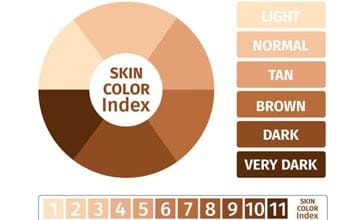
Skin of Color: Skincare for Ethnic & Darker Skin Tones
Skin of color refers to darker skin tones with higher concentrations of melanin, typically classified within Fitzpatrick skin types IV–VI. This includes individuals of African, Hispanic/Latinx, Middle Eastern, South Asian, East Asian, Indigenous, and mixed ethnic backgrounds. Melanin-rich skin functions differently at a cellular level—particularly in how melanocytes respond to inflammation, heat, and professional treatments—which is why a more controlled, customized approach is required to treat the skin safely and effectively.
Over the years, there have been many myths and misconceptions as to whether darker skin tones can have chemical peels and/or microneedling. The answer is YES, but with caution. One of the primary concerns for Skin of Color when having any skin treatments is the potential to develop Post-Inflammatory Hyperpigmentation, referred to as PIH.
Table of Contents
What Is Skin of Color?
Skin of color describes a range of deeper skin tones with increased melanin production. While melanin provides natural protection against UV damage and premature aging, it also makes the skin more reactive to inflammation, irritation, and certain treatments when not approached correctly.
How Melanin-Rich Skin Functions
Melanin is produced by melanocytes, which are more active and reactive in darker skin tones.
This leads to:
- Faster pigment response to inflammation
- Increased risk of discoloration after acne or irritation
- Longer-lasting pigmentation
- Greater sensitivity to aggressive treatments
This is why conditions like Post-Inflammatory Hyperpigmentation are more common and more persistent in darker skin tones.
Why Skin of Color Requires a Different Approach
Treating skin of color is not simply about adjusting treatment intensity—it requires a fundamentally different approach. Melanocytes in darker skin tones are more active and responsive.
This means that even small amounts of inflammation—whether from heat, irritation, or overly aggressive treatments—can trigger excess pigment production.
Because of this, treatments that may be well tolerated in lighter skin can lead to:
- Post-inflammatory hyperpigmentation
- Uneven skin tone
- Prolonged healing
- Increased sensitivity
🔬 Scientific support: Studies show that skin of color has increased melanocyte activity and responds differently to inflammation and cosmetic procedures, which increases the risk of pigmentation when treatments are not properly customized.
What This Means for Treatment
For darker skin tones, the focus is not on aggressive correction—but on controlled, strategic progress.
This includes:
• Minimizing inflammation at every stage • Using conservative, progressive treatment methods • Properly preparing the skin beforehand • Supporting the skin with the right skincare products • Spacing treatments appropriately for safe, consistent results
When this approach is followed, treatments can be performed safely and effectively—while improving the skin without triggering unwanted pigmentation.
Common Skin Concerns in Skin of Color
- Hyperpigmentation and uneven tone
- Acne and post-acne discoloration
- Melasma
- Keloid or raised scarring
- Razor bumps and ingrown hairs
- Dryness appearing as ashiness
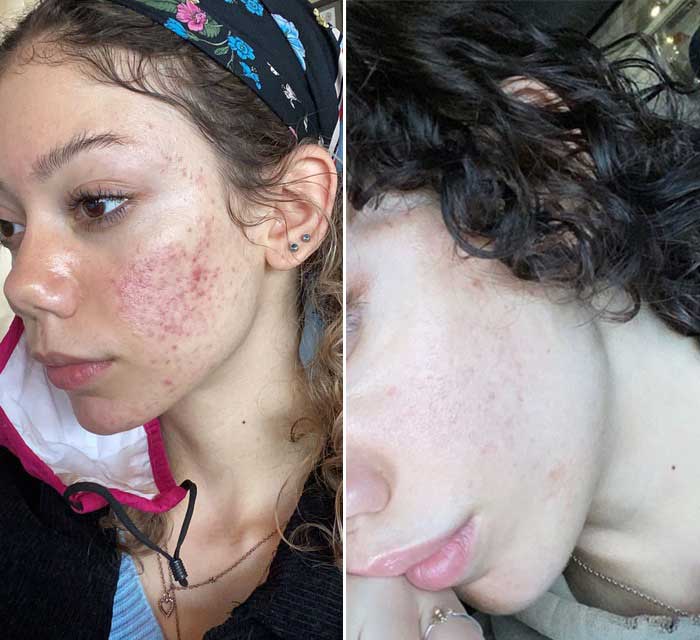
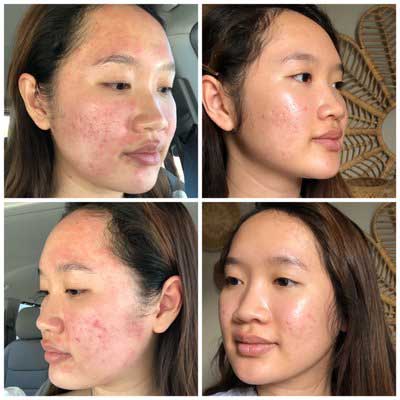
chemical peeling progress photos
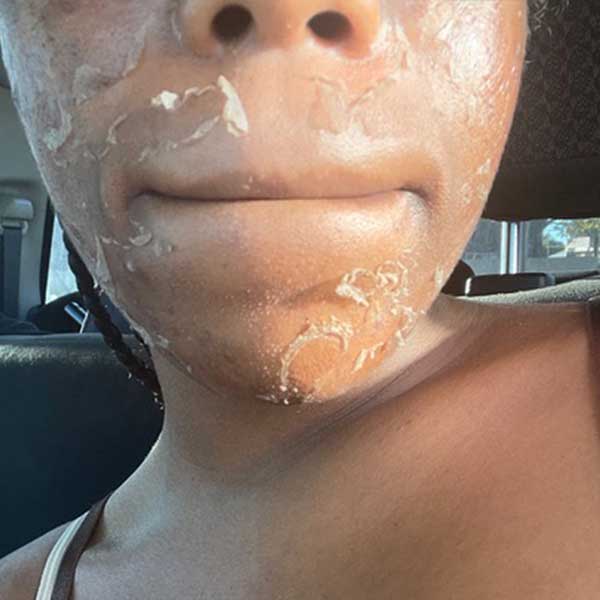
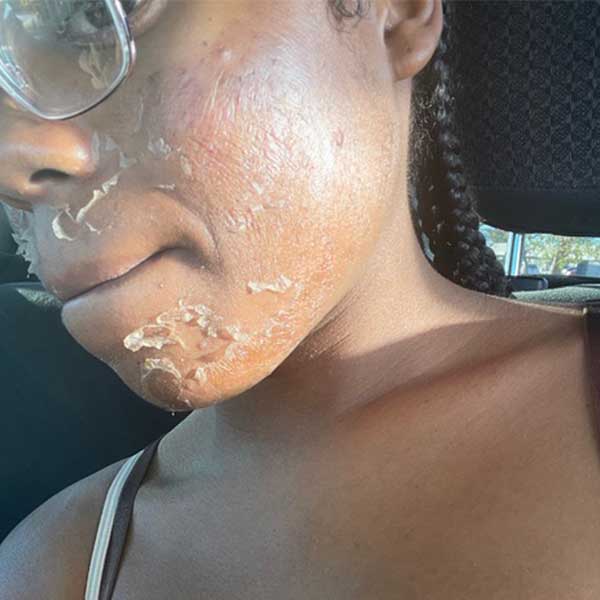
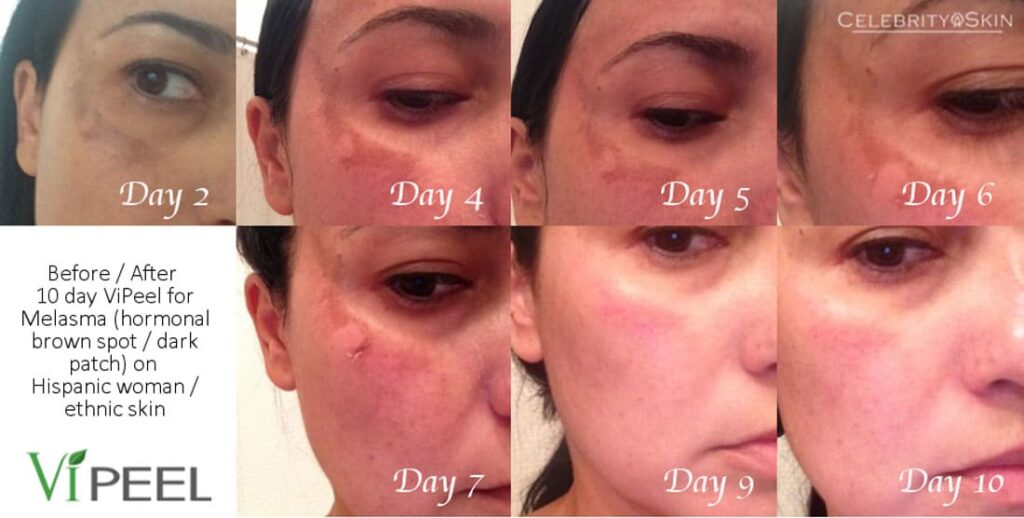
Safe Treatment Options for Skin of Color
Not all treatments are automatically safe for darker skin tones—even those commonly recommended. Treatments such as microneedling, chemical peels, and Clear + Brilliant laser can be appropriate for skin of color, but only when they are properly selected, the skin is correctly prepared, and the treatment is performed with a conservative, customized approach.
Skin of color responds differently due to increased melanocyte activity, which means any unnecessary inflammation or irritation can trigger pigmentation. Because of this, the safety of a treatment depends more on how it is performed than the treatment itself.
What Makes a Treatment Safe for Skin of Color?
For treatments to be performed safely and effectively, several factors must be in place:
• Proper skin preparation beforehand to stabilize melanocyte activity
• Careful treatment selection based on your skin’s reactivity and history
• Conservative technique and settings to minimize inflammation
• Customized treatment planning, not a one-size-fits-all approach
• Strategic timing between treatments to allow proper healing
• Supportive skincare products to control pigment and reduce irritation
Treatment Options That Can Be Safe—When Done Correctly
Microneedling is often well tolerated by darker skin tones because it does not rely on heat. However, technique, depth, frequency, and post-care all play a role in determining whether it is safe and effective.
Chemical peels can improve pigmentation, acne, and texture, but must be selected carefully. The type of acid, concentration, and application must be customized and performed progressively to avoid overstimulating pigment. To learn more about chemical peels on darker skin tones read Can People With Dark Skin Get Chemical Peels
This non-ablative laser can be appropriate for many individuals with darker skin tones. However, results depend on proper skin preparation, conservative settings, and correct patient selection. It is not automatically safe for every skin type without these considerations.
Why Customization Matters
Two people with the same skin tone can respond very differently to the same treatment. That’s why treatment plans must be based on:
• Skin sensitivity and reactivity • Current pigment activity • Skin barrier health • Previous treatment and product history
When treatments are approached in a controlled, customized way, they can safely improve the skin. When they are not, they can increase the risk of pigmentation and inconsistent results.
Microneedling, chemical peels, and laser treatments are not inherently “safe” or “unsafe” for skin of color—the outcome depends on preparation, technique, and customization. A strategic, individualized approach is what allows these treatments to be performed safely while achieving consistent, long-term results.
Before and Afters

Why Preparation Is Critical
Preparation is one of the most important steps in treating skin of color safely. Without proper preparation, treatments can lead to:
• Post-inflammatory hyperpigmentation • Uneven healing • Increased sensitivity
Prepared skin responds more predictably and heals more efficiently.
Pigment Suppression: Why Product Quality Matters
Using pigment-suppressing ingredients is essential—but not all products are created equal. Ingredients like:
• Kojic acid • Azelaic acid • Vitamin C • Niacinamide • Tranexamic acid
can help regulate melanocyte activity—but only if they are:
• Formulated in effective concentrations • Chemically stable • Delivered properly into the skin • Combined correctly with other ingredients
Just because a product contains an ingredient does not mean it will work. Many over-the-counter or improperly formulated products:
• Contain low or ineffective percentages • Are unstable (especially vitamin C) • Do not penetrate the skin effectively • Can irritate the skin and worsen pigmentation
Why More Products Is Not Better
A common mistake is layering too many products or using overly aggressive routines. This can lead to:
• Over-exfoliation • Increased sensitivity • Barrier disruption • Breakouts—even from products labeled “non-comedogenic” • Increased risk of pigmentation
Effective Skincare For Skin of Color
Effective skincare for skin of color is not about using more—it’s about using the right products in the right combination. A well-designed routine should:
• Calm melanocyte activity • Support the skin barrier • Prevent inflammation • Progress results gradually
The goal is a precise, curated routine tailored to your skin, not an overwhelming number of products.
Start With a Plan Designed for Your Skin
Skin of color requires a more precise and customized approach. A consultation allows us to assess your skin, stabilize pigment if needed, and guide you toward the safest and most effective treatments for your goals.
Why Choose Celebrity Skin Scottsdale
Treating skin of color is not about using standard protocols—it requires experience, restraint, and a deep understanding of how melanocyte activity affects the skin. At Celebrity Skin Scottsdale, every treatment is approached with a focus on safety, precision, and long-term results, not quick fixes.
- 25+ years of clinical skincare experience
- Laser certified for over 20 years
- Advanced training in skin of color and darker skin tones
- Specialized in acne, pigmentation, and corrective treatments
- Functional approach addressing both internal and external factors
- Expertise in safely stacking treatments for more efficient results
Rather than using aggressive or one-size-fits-all treatments, we take a controlled, customized approach—preparing the skin properly, selecting the right treatments, and progressing results in a way that protects your skin while improving it. This is especially important for darker skin tones, where the wrong approach can lead to pigmentation or inconsistent outcomes.
Ethnic Skin FAQs
Why does darker skin require a different approach?
Because melanocytes (pigment-producing cells) are more active and reactive in darker skin tones, even small amounts of inflammation—whether from acne, heat, products, or treatments— can trigger excess pigment production. This is why treatments must be more controlled, progressive, and designed to minimize irritation at every stage.
Are treatments safe for darker skin tones?
Yes—when they are properly selected, performed conservatively, and done on correctly prepared skin. The risk comes from treatments that are too aggressive or not customized for how your skin responds, which is why a personalized approach is essential.
Why is skin preparation necessary before treatments?
Preparation helps stabilize melanocytes, strengthen the skin barrier, and reduce inflammation before introducing any procedure. Without proper prep, the skin is more likely to overreact, increasing the risk of pigmentation and inconsistent results.
What happens if my skin is not properly prepared?
Treatments performed on unprepared skin can lead to post-inflammatory hyperpigmentation, prolonged healing, increased sensitivity, and uneven results. In many cases, this is why people feel like treatments made their skin worse.
Do skincare products really make a difference?
Yes. Skincare products play a critical role in regulating pigment, reducing inflammation, and supporting the skin between treatments. However, results depend on how those products are formulated and how they are used—not just the ingredients listed on the label.
Why don’t all skincare products work the same for darker skin tones?
Because skin of color is more reactive, it requires carefully selected products in specific formulations, strengths, and combinations to properly prepare the skin for treatment. It’s not just about having the right ingredients—those ingredients must be stable, used at effective concentrations, and introduced in a way that does not trigger irritation. Improper products or incorrect layering can overstimulate melanocytes and increase the risk of pigmentation, which is why a customized skincare plan is essential.
What ingredients help prevent pigmentation?
Ingredients such as kojic acid, azelaic acid, vitamin C, niacinamide, and tranexamic acid can help regulate melanocyte activity. However, they must be used in the correct formulations and combinations to be effective without causing irritation
Can using too many skincare products make my skin worse?
Yes. Over-layering products or using too many active ingredients can disrupt the skin barrier, increase sensitivity, and trigger pigmentation or breakouts—even when products are labeled noncomedogenic. A simplified, targeted routine is often more effective.
Are chemical peels safe for darker skin tones?
Yes—but they must be performed using the correct type of peel, strength, and progression. Treatments are typically done gradually to improve the skin without overstimulating pigment, which is why customization is key.
Are lasers safe for darker skin?
Some are, but many can cause hyperpigmentation if they are too aggressive or used incorrectly. Safe outcomes depend on proper device selection, conservative settings, and ensuring the skin is properly prepared before treatment.
How long does it take to see results?
Results are typically gradual because treatments must be performed in a controlled way to avoid triggering pigmentation. A consistent, well-planned approach produces safer and more longlasting improvements.
✨ Ready for a Customized Plan for Your Skin? ✨
Every skin is different—especially when it comes to treating skin of color safely.
A consultation allows us to assess your skin, stabilize pigment activity if needed, and guide you through the most effective next steps.
Effective Treatments for Skin of Color:
- Clinical Facials: The majority of our facials include enzymes, extractions, microdermabrasion or dermaplaning with a light chemical peel and Celluma LED light therapy to address acne, scarring, pigmentation concerns, rough texture, fine lines and wrinkles.
- Chemical Peels: Chemical peels are excellent options for treating acne, scarring, hyperpigmentation, and wrinkles in SOC. These treatments should be applied in a progressive manner to avoid worsening pigmentation concerns.
- Mid-Depth Peels- Higher concentrated deeper peels designed for all skin types and tones, formulated to boost collagen to improve the appearance of acne, fine lines, wrinkles, brown spots and all types of scarring.
- Microneedle Peels: Celebrity Skin in Scottsdale offers microneedle peels, a technique that uses fine needles to stimulate collagen production in combination with light chemical peels and light therapy to address pigmentation, fine lines, scarring and skin texture. This treatment works effectively on all skin tones, including darker skin, to improve skin clarity and reduce scarring safely.
- Clear and Brilliant Laser: Another excellent treatment option is Clear and Brilliant, a non-ablative laser designed to target early signs of aging and improve skin texture and tone. It’s safe for MOST individuals with SOC, helping to reduce fine lines, hyperpigmentation, and skin imperfections without the downtime associated with more invasive laser treatments.
- At-Home Skincare: Products containing retinoids, glycolic acid, salicylic acid, and benzoyl peroxide can help control acne and hyperpigmentation. However, these must be used cautiously to avoid irritation and excessive dryness which leads to more hyperpigmentation..
Customized Treatment Plans: Begin with a New Client Consultation + Treatment to evaluate your unique skin needs, lifestyle factors, and product history. This consultation helps us create a personalized treatment plan that aligns with your goals and skin type, ensuring effective and safe results.
What to Avoid:
- Generic Advice: Do not rely on unqualified advice from department stores, spas, or the internet. SOC skin requires specialized treatments and products tailored to your specific needs.
- Over-the-Counter Products: Avoid products that claim to work for SOC skin without professional input. Choose treatments specifically designed for darker skin tones.
Why Choose Us: At Celebrity Skin in Scottsdale, our expert team specializes in Skin of Color treatments. We offer advanced options like microneedle peels, exosomes, Celluma Light Therapy, medium-depth peels and Clear and Brilliant laser treatments, ensuring safe and effective care tailored to your skin’s unique needs.
Start Your Journey to Healthy, Glowing Skin: Book your New Client Consultation + Treatment today to get a personalized plan for managing acne, hyperpigmentation, or any other concerns. Let us guide you toward clearer, more even skin with a professional approach.

Custom services for skin of color
- New Client Consultation + Treatment
- Acne Deep Pore Cleansing Chemical Peel Facial + Light Therapy
- Chemical Peel
- Men’s Facial + Light Therapy
- Acne Facial For Teens + Light Therapy
- Back facial with Celluma Light Therapy
- Microneedling Treatment
- Body Chemical Peel
- The “Works” Chemical Peel Treatment
* All ethnic skin treatments can and will be customized for your specific needs
Everyone’s skin is different. The best thing is to do is book a New Client Consultation + Treatment to discuss and personalize your treatment with products to meet your individual needs.
Explore topics related to ethnic skin
consultations
chemical peels
light therapy
microneedle peel
recent posts related to ethnic skin
Sorry, no posts were found.